

Life can be a beautiful, complex dance of joy and sorrow, triumphs and tribulations. But let’s be honest, sometimes it feels less like a dance and more like a wrestling match with an invisible, formidable opponent. We’ve all been there: staring at a pile of challenges, feeling the weight of the world on our shoulders, and wondering how on earth we’re supposed to keep smiling, let alone thrive. When financial pressures mount, relationships falter, health issues arise, or unexpected curveballs are thrown your way, maintaining an optimistic outlook can feel like a superhuman feat. You might find yourself asking, “Is it even possible to feel good when everything feels wrong?”
The good news is, absolutely. While we can’t control every circumstance, we do have immense power over our internal landscape. It’s not about ignoring pain or pretending everything is perfect; it’s about developing the mental muscles to navigate difficulty with grace, resilience, and a fundamental belief in your own strength. It’s about learning how to build a positive mindset when life is hard, not by magic, but by intentional, consistent effort. This isn’t just about feeling happier; it’s about cultivating an inner fortress that can withstand life’s storms, ensuring you emerge not just intact, but often stronger and wiser. Join us as we explore actionable strategies to shift your perspective, nurture your spirit, and rediscover your inner light, even when the path ahead seems shrouded in darkness.
Acknowledge and Validate Your Emotions: It’s Okay Not to Be Okay
One of the most common pitfalls when trying to cultivate a positive mindset is the mistaken belief that you must suppress negative emotions. The pressure to “be positive” can sometimes translate into an unhealthy avoidance of sadness, anger, frustration, or fear. But here’s the honest truth: positivity isn’t about the absence of negative emotions; it’s about how you relate to them. Pushing away valid feelings doesn’t make them disappear; it often amplifies them, causing them to fester beneath the surface, eventually erupting in unexpected ways. Imagine trying to hold a beach ball underwater – the harder you push it down, the more force it exerts to spring back up.
Instead, the first, most crucial step in building a truly resilient and positive mindset is to create space for all your emotions. This is radical acceptance. It means acknowledging what you’re feeling without judgment, shame, or the need to fix it immediately. When you’re struggling, it’s completely natural to feel a myriad of uncomfortable emotions. These feelings are not a sign of weakness; they are simply signals from your inner world, letting you know that something needs attention. Suppressing them is like trying to silence a fire alarm because you don’t like the noise – it doesn’t put out the fire, it just prevents you from dealing with it.
How to Practice Emotional Validation:
- Name It to Tame It: Research from UCLA neuroscientist Dr. Matthew Lieberman suggests that simply labeling an emotion can reduce its intensity. When you feel a surge of anxiety or sadness, try to articulate it, either to yourself or a trusted friend. “I’m feeling really overwhelmed right now.” “This situation is making me incredibly angry.” This act of naming creates a slight distance, allowing you to observe the emotion rather than being consumed by it.
- Journaling for Clarity: Dedicate a few minutes each day to writing down whatever comes to mind, especially your feelings. Don’t censor yourself. This stream-of-consciousness writing can be incredibly cathartic, offering an outlet for emotions you might not feel comfortable expressing aloud. It also helps you identify patterns and triggers, giving you valuable insights into your emotional landscape. There’s no right or wrong way to journal; just let the words flow.
- Mindful Body Scan: Our emotions often manifest physically. Take a moment to sit or lie down comfortably and bring your attention to different parts of your body. Where do you feel tension, discomfort, or tightness? Is there a knot in your stomach, a tightness in your chest, or a frown on your brow? Acknowledge these sensations without trying to change them. Simply notice them with curiosity. Often, the act of gentle awareness can begin to soften the physical manifestation of emotional distress.
- Use Compassionate Self-Talk: Replace self-critical thoughts like “I shouldn’t be feeling this way” with empathetic statements such as, “It’s understandable that I feel sad given what I’m going through,” or “This is a really tough situation, and it’s okay to feel overwhelmed.” Treat yourself with the same kindness and understanding you would offer a dear friend in a similar situation.
By giving yourself permission to feel, you create a solid foundation upon which a truly authentic and enduring positive mindset can be built. You learn that experiencing difficult emotions doesn’t negate your capacity for joy and optimism; it simply makes your eventual return to those states even richer and more meaningful.
Reframe Your Perspective: The Power of Cognitive Restructuring to Build a Positive Mindset When Life Is Hard
Our thoughts are incredibly powerful; they shape our reality, influence our emotions, and dictate our reactions. When life is hard, it’s easy to fall into negative thought patterns – catastrophizing, mind-reading, all-or-nothing thinking, or jumping to conclusions. These cognitive distortions can create a self-fulfilling prophecy of negativity, even if the actual circumstances aren’t as dire as our minds are making them out to be. Cognitive reframing, a core technique in cognitive behavioral therapy (CBT), teaches us how to challenge these unhelpful thought patterns and intentionally choose alternative, more constructive interpretations.
This isn’t about “positive thinking” in a naive, dismissive sense. It’s about recognizing that while you can’t always change the facts of a situation, you absolutely can change your interpretation of those facts. It’s about shifting from a fixed mindset that sees obstacles as dead ends, to a growth mindset that views challenges as opportunities for learning and development. This practice is central to learning how to build a positive mindset when life is hard because it empowers you to actively participate in shaping your emotional experience, rather than passively letting circumstances dictate it.
How to Practice Cognitive Reframing:
- Identify Your Automatic Negative Thoughts (ANTs): Become an observer of your own mind. What are the common negative narratives that play on repeat when you’re stressed? Do you tend to jump to the worst-case scenario? Do you personalize everything? Do you dismiss positives and dwell on negatives? For instance, if you get critical feedback at work, do you immediately think, “I’m a failure, I’ll never succeed here,” rather than “This is an opportunity to improve”?
- Challenge the Evidence: Once you’ve identified an ANT, ask yourself:
- Is this thought 100% true? What evidence supports it? What evidence contradicts it?
- Am I looking at this situation from only one angle? What other perspectives are possible?
- What would I tell a friend who was having this same thought?
- Is this thought helpful, or is it making me feel worse without solving anything?
For example, if you think, “I’ll never get through this,” challenge it: “Have I overcome difficult things before? Yes. What resources do I have now? What small step can I take?”
- Find Alternative Interpretations: Actively seek out a more balanced, realistic, or even empowering way to view the situation. This isn’t about putting on rose-tinted glasses; it’s about expanding your lens.
- Instead of: “I lost my job; my life is over.”
Try: “Losing my job is incredibly painful, but it’s also an unexpected chance to re-evaluate my career path and explore new possibilities I might not have considered before.” - Instead of: “This relationship setback means I’m unlovable.”
Try: “This breakup is heartbreaking, but it’s also teaching me valuable lessons about what I need and deserve in a partner, and strengthening my sense of self-worth.” - Instead of: “This problem is insurmountable.”
Try: “This is a significant challenge, but I have skills and resources I can draw upon. I’ll break it down into smaller, manageable steps.”
- Instead of: “I lost my job; my life is over.”
- Practice “Benefit-Finding”: Even in the midst of adversity, there can be hidden lessons or unexpected growth. This isn’t about toxic positivity, but about acknowledging the potential for good alongside the bad. A health scare might lead you to prioritize wellness; a financial struggle might force you to be more creative and resourceful; a difficult conversation might deepen a relationship.
Cognitive reframing is a skill that strengthens with practice. The more you consciously identify and challenge unhelpful thoughts, the more natural it becomes to adopt a more resilient and optimistic perspective. It’s a powerful tool in your arsenal for navigating life’s inevitable difficulties.
Cultivate Gratitude, Even in the Smallest Things
When the going gets tough, it’s incredibly easy for our minds to fixate on what’s going wrong, what we’ve lost, or what we lack. This negative bias is a natural survival mechanism, but left unchecked, it can plunge us into a spiral of despair. This is where the profound practice of gratitude steps in. Gratitude isn’t about denying your pain or ignoring your problems; it’s about consciously shifting your focus, even for a few moments, to appreciate the good that still exists, no matter how small or seemingly insignificant. It’s a powerful antidote to cynicism and a key component in learning how to build a positive mindset when life is hard.
Neuroscience supports the power of gratitude. Studies have shown that practicing gratitude can literally rewire your brain, increasing activity in areas associated with moral cognition, reward, and social bonding. It can boost mood, reduce stress, improve sleep, and even strengthen your immune system. It widens your perspective, reminding you that despite difficulties, life still holds moments of beauty, connection, and grace. It’s not about being grateful for the hardship, but being grateful in spite of the hardship.
How to Cultivate Gratitude:
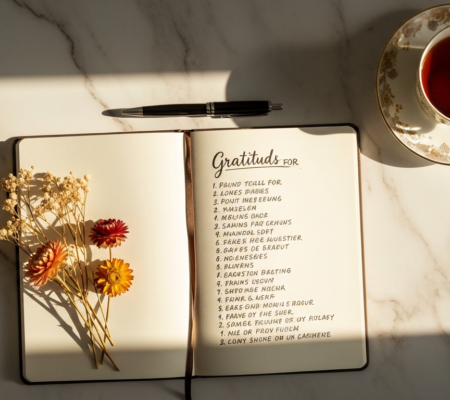
- The “Three Good Things” Exercise: Every evening, before bed, take a few minutes to think of three specific things that went well or that you felt grateful for during the day. They don’t have to be monumental achievements. It could be a warm cup of coffee, a kind word from a colleague, a beautiful sunset, the comfort of your bed, or simply the fact that you made it through a tough day. Write them down in a dedicated gratitude journal and briefly explain why you’re grateful for each.
- Express Gratitude to Others: Don’t just feel it, express it. Take the time to genuinely thank someone who has helped you, supported you, or simply made you smile. A sincere thank-you note, a heartfelt text, or a verbal expression of appreciation not only boosts their mood but also reinforces your own sense of gratitude and connection.
- Gratitude Jar: Keep a jar visible in your home. Throughout the year, when something good happens or you feel a wave of gratitude, write it down on a small slip of paper and put it in the jar. On a challenging day, or at the end of the year, open the jar and read through the notes. It’s a powerful reminder of all the good you’ve experienced.
- Mindful Gratitude Moments: Integrate gratitude into your daily routine. As you drink your morning tea, appreciate the warmth. As you walk outside, notice the colors of nature. As you eat, savor the flavors and textures. These small, conscious moments of appreciation accumulate to create a more grateful outlook.
- Contrast & Perspective: Sometimes, reflecting on past difficulties that you’ve overcome can foster gratitude for your current resilience. Or, considering how things could be worse (without dwelling on it) can highlight the good aspects of your present situation. This isn’t to minimize your current struggles but to provide perspective.
Gratitude is a muscle that strengthens with use. The more you consciously practice it, the more naturally your mind will begin to seek out and appreciate the positives, even when life presents its most formidable challenges. It’s not about ignoring pain; it’s about acknowledging light.
Set Boundaries and Practice Intentional Self-Care
When life throws curveballs, our instinct might be to push harder, take on more, or neglect our own needs in service of others or perceived obligations. However, this is precisely when intentional self-care and firm boundaries become non-negotiable. Trying to navigate difficult times without adequate rest, nourishment, and emotional protection is like trying to drive a car with no fuel in the tank and faulty brakes – it’s a recipe for burnout and breakdowns. Self-care isn’t selfish; it’s essential for building a positive mindset when life is hard, acting as your personal wellspring of resilience and strength.
True self-care goes beyond bubble baths and face masks (though those can certainly be part of it!). It’s about understanding your fundamental needs – physical, emotional, mental, and spiritual – and actively working to meet them. It’s about protecting your energy, saying “no” when necessary, and creating a sustainable pace for yourself amidst chaos. Without this foundation, your efforts to cultivate positivity will always be swimming upstream against a powerful current of depletion.
How to Implement Boundaries and Self-Care:
- Learn to Say “No” (and Mean It): This is perhaps the most crucial boundary. When you’re already stressed, adding more to your plate can be detrimental. Politely decline invitations, requests, or commitments that don’t align with your capacity or values. You don’t need elaborate excuses; “I appreciate the offer, but I can’t take that on right now” is perfectly sufficient. Saying “no” to others is often saying “yes” to yourself.
- Prioritize Sleep: Sleep is often the first thing to suffer during stress, yet it’s one of the most vital components of mental and emotional resilience. Aim for 7-9 hours of quality sleep per night. Establish a consistent sleep schedule, create a relaxing bedtime routine, and make your bedroom a sanctuary. A well-rested mind is far more capable of handling challenges and maintaining a positive outlook.
- Nourish Your Body and Mind: Pay attention to what you consume.
- Food: Fuel your body with nutritious, whole foods that support stable energy levels and mood. Limit excessive sugar, caffeine, and processed foods that can exacerbate anxiety and fatigue.
- Media: Be mindful of your information diet. Limit exposure to overwhelming news cycles, negative social media, or toxic conversations. Choose uplifting podcasts, inspiring books, or calming music instead.
- Schedule “Me-Time” (and Protect It Fiercely): Even 15-30 minutes a day dedicated solely to yourself can make a huge difference. This isn’t about being unproductive; it’s about recharging. This could be reading, meditating, taking a walk, listening to music, pursuing a hobby, or simply sitting in quiet contemplation. Treat this time as non-negotiable as any important appointment.
- Movement and Nature: Physical activity is a powerful stress reliever and mood booster. Even a brisk walk outside can clear your head, release endorphins, and provide a much-needed break from overwhelming thoughts. Connecting with nature, even in a small way, has proven benefits for mental well-being.
- Create a “Stop Doing” List: Identify tasks, habits, or interactions that drain your energy without yielding significant positive results. Could you delegate something? Opt out of a committee? Reduce screen time? Eliminating energy leaks frees up valuable mental and emotional resources.
By consciously setting boundaries and integrating consistent self-care practices, you’re not just surviving; you’re building a sustainable foundation for thriving. This deliberate self-nurturing is a powerful declaration of your worth and your commitment to your own well-being, which is essential for cultivating a positive mindset.
Find Your Tribe: The Importance of Connection and Support
Humans are inherently social creatures. When life gets hard, our natural inclination might sometimes be to withdraw, to hunker down and face challenges alone. While a certain amount of introspection can be healthy, prolonged isolation is detrimental to our mental and emotional well-being. Loneliness amplifies stress, distorts perspective, and makes cultivating a positive mindset infinitely more difficult. True connection, on the other hand, provides a vital lifeline, offering solace, different perspectives, practical help, and a reminder that you are not alone in your struggles.
Your “tribe” might be your immediate family, a close-knit group of friends, a supportive partner, a mentor, or even a community group. The key is to have people in your life who see you, hear you, and validate your experiences without judgment. These are the individuals who can offer a shoulder to cry on, celebrate your small victories, and gently challenge unhelpful thinking patterns when you’re caught in a loop. Leaning on others isn’t a sign of weakness; it’s a testament to your strength and your understanding of what it takes to navigate life’s complexities.
How to Foster Connection and Seek Support:
- Reach Out and Be Vulnerable: It can be hard to admit you’re struggling, but vulnerability is the bedrock of deep connection. Pick one trusted person – a friend, family member, or therapist – and share what’s truly going on. You don’t need them to fix it; often, simply being heard and understood is immensely healing. Start with “I’m having a really tough time lately, and I just needed to talk.”
- Schedule Regular Check-ins: In busy lives, connections can drift. Make an intentional effort to schedule regular time with people who uplift you. This could be a weekly coffee date, a monthly dinner, a recurring video call, or a walking buddy. Prioritize these interactions as much as you would work appointments.
- Join a Community: If your immediate circle feels stretched, or if you’re seeking connections around a specific interest or challenge, consider joining a group. This could be a book club, a hiking group, a volunteer organization, a support group (for specific life challenges like grief or illness), or even an online forum dedicated to a hobby. Shared interests are powerful bridges to new friendships.
- Offer Support in Return: Relationships are a two-way street. Being a supportive friend or family member to others not only strengthens your bonds but also provides a sense of purpose and contribution, which are powerful boosters for your own positive mindset. The act of giving can be just as beneficial as receiving.
- Seek Professional Help: Sometimes, the challenges are too great to navigate with just personal support. There is immense strength in recognizing when you need professional guidance. A therapist, counselor, or life coach can provide expert strategies for coping, reframing, and building resilience, offering a safe, confidential space to process difficult emotions and develop new tools for a positive outlook. This is not a sign of failure, but a wise investment in your mental well-being.
- Limit Toxic Relationships: Just as positive connections uplift you, negative or draining relationships can erode your positivity. While you can’t always cut ties with everyone, you can set boundaries, limit interaction, and protect your energy from individuals who consistently bring you down, criticize you, or demand too much without reciprocation.
Remember, building a positive mindset is not a solitary journey. It’s a collaborative effort that thrives in the rich soil of human connection. Allow yourself to be supported, and you’ll find reservoirs of strength you didn’t know you had.
Embrace Growth and Resilience: Seeing Challenges as Opportunities
When you’re knee-deep in difficulty, it’s incredibly hard to see beyond the immediate pain or frustration. The idea of “seeing challenges as opportunities” can sound like a saccharine platitude. Yet, consistently, human history and personal stories alike demonstrate that some of our greatest growth, deepest wisdom, and most profound strengths emerge not from comfort, but from adversity. This isn’t about romanticizing suffering, but about consciously adopting a mindset that views struggle not as a static dead end, but as a dynamic pathway to becoming a stronger, more capable version of yourself. This perspective is fundamental for anyone wanting to truly understand how to build a positive mindset when life is hard.
The concept of “post-traumatic growth” (PTG) illustrates this beautifully. It refers to the positive psychological change experienced as a result of struggling with highly challenging life circumstances. This isn’t just “bouncing back” (resilience), but “bouncing forward” – developing a deeper appreciation for life, stronger relationships, a renewed sense of purpose, increased personal strength, and spiritual growth. While not everyone experiences PTG from every struggle, cultivating a growth mindset proactively increases your chances.
How to Cultivate a Growth-Oriented Perspective:
- Reflect on Past Adversities: Think back to a time in your life when you faced a significant challenge and overcame it. What did you learn about yourself? What skills did you develop? How did you change? Acknowledge your past resilience. This helps you build confidence in your ability to handle current and future difficulties.
- Ask “What Can I Learn From This?”: When confronted with a setback, pause and consciously ask yourself this question. Instead of “Why is this happening to me?”, try “What is this trying to teach me?” It might be a lesson in patience, adaptability, resourcefulness, humility, or self-compassion. Even if the lesson isn’t immediately clear, adopting the question primes your mind for learning rather than despair.
- Focus on What You Can Control: In challenging times, it’s easy to feel powerless. Identify the aspects of the situation that are within your sphere of influence and direct your energy there. You might not control a job loss, but you can control your resume, networking efforts, and attitude during the job search. This shifts you from a victim mentality to one of agency.
- Set Small, Achievable Goals: When facing a large, daunting problem, break it down into tiny, manageable steps. Achieving these small goals creates momentum, builds confidence, and provides a sense of progress, even when the overall situation still feels overwhelming. Each small win contributes to a sense of mastery and belief in your capabilities.
- Embrace Imperfection and Process: Building resilience and fostering growth is not a linear path. There will be good days and bad days, steps forward and steps backward. Embrace the messy, imperfect process. Don’t let a “bad day” derail your entire effort; simply acknowledge it, learn from it, and gently redirect your focus for the next moment.
- Seek Inspiration: Read stories of individuals who have overcome significant adversity. Watch documentaries or listen to podcasts that highlight human resilience. Seeing others navigate and transcend hardship can be incredibly motivating and provide valuable strategies and perspectives.
By consciously choosing to view challenges as potential catalysts for growth, you transform passive endurance into active engagement. You empower yourself to extract wisdom and strength from every experience, fundamentally reshaping your capacity to build and sustain a positive mindset.
Mindful Practices: Anchoring Yourself in the Present
When life is hard, our minds tend to either dwell on past regrets and hurts or race forward into future anxieties and catastrophic “what ifs.” This mental time travel pulls us away from the only moment we truly have – the present – and can exacerbate feelings of stress, overwhelm, and helplessness. Mindful practices offer a powerful antidote, providing tools to anchor ourselves firmly in the here and now. They are not about emptying your mind or achieving perfect tranquility, but about cultivating awareness without judgment. This intentional presence is a crucial skill for anyone committed to learning how to build a positive mindset when life is hard, as it allows you to observe your thoughts and emotions without being consumed by them.
Mindfulness helps create a vital space between stimulus and response. In that space, you gain the freedom to choose your reaction, rather than being swept away by automatic negative patterns. Regular mindful practice has been shown to reduce stress, improve emotional regulation, enhance focus, and even change the physical structure of the brain, promoting areas associated with well-being and emotional balance.
How to Integrate Mindful Practices:
- The 5-Minute Breath Anchor: This is a simple, accessible practice you can do anywhere. Find a comfortable position. Close your eyes if you wish. Bring your attention to your breath. Notice the sensation of the air entering and leaving your body – the rise and fall of your chest or belly, the feeling at your nostrils. When your mind wanders (and it will!), gently guide it back to your breath without judgment. Just 5 minutes can help calm your nervous system and bring you back to the present.
- Mindful Eating: Transform an everyday act into a mindful practice. When you eat your next meal or snack, put away distractions. Notice the colors, textures, and aromas of your food. Take a small bite, chew slowly, and pay attention to the flavors and sensations in your mouth. Notice how your body feels as you eat. This helps you slow down and appreciate a simple pleasure.
- Walking Meditation: As you walk, bring your awareness to the sensations in your feet as they connect with the ground. Notice the rhythm of your steps, the movement of your legs, the swing of your arms. Pay attention to the sights, sounds, and smells around you, noticing them without labeling or judging. This grounds you in your physical experience and surroundings.
- Body Scan Meditation: Lie down or sit comfortably. Bring your attention sequentially to different parts of your body, starting from your toes and moving up to the crown of your head. Notice any sensations – warmth, coolness, tension, tingling – without trying to change them. This helps you connect with your body and release stored tension.
- Mindful Pauses Throughout the Day: Set an alarm for a few times a day (e.g., every two hours). When it rings, pause for 60 seconds. Take three deep breaths, notice what you’re doing, what you’re feeling, and what you’re thinking without judgment. This micro-practice helps break cycles of autopilot and brings you back to conscious awareness.
- Engage Your Senses: Whenever you feel overwhelmed, pick one of your five senses and focus intensely on it for a minute. What do you see right now? What do you hear? What do you smell? What do you feel (e.g., the texture of your clothes, the warmth of a mug)? This pulls your attention away from abstract worries and into concrete reality.
Mindfulness is not a quick fix, but a cumulative practice. The more you consciously choose to bring your awareness to the present moment, the more equipped you become to navigate the turbulence of difficult times with a sense of calm and a clearer perspective, helping you sustain a positive mindset even when things are tough.
Conclusion: Your Journey to Enduring Positivity
Life’s challenges are inevitable. They will test your limits, shake your foundations, and sometimes, make you question everything. But remember, the goal isn’t to eliminate hardship or pretend it doesn’t exist. It’s about cultivating an inner strength and a resilient spirit that allows you to navigate these storms with greater ease, learn from them, and ultimately, emerge with a deeper, more authentic sense of positivity. Learning how to build a positive mindset when life is hard isn’t a destination you arrive at; it’s a continuous practice, a lifelong commitment to tending your inner garden.
You are not alone in this journey. Every woman, at some point, faces her own unique set of battles. What sets us apart is not the absence of struggle, but the courage to lean into the discomfort, apply these intentional strategies, and trust in our innate capacity to find the light, even in the darkest corners. Start small. Choose one or two practices that resonate with you from this article and commit to them daily. Be patient with yourself, offer yourself grace on the tough days, and celebrate every tiny shift in perspective.
Remember, building a positive mindset is an act of profound self-care, a declaration of your worth, and an investment in your enduring well-being. You have the power within you to cultivate joy, resilience, and optimism, no matter what life throws your way. Keep going, dear friend. Your light is waiting to shine.
Frequently Asked Questions About Building a Positive Mindset
Q: Is it okay to feel negative emotions when trying to build a positive mindset?
A: Absolutely. True positivity isn’t about suppressing or ignoring negative emotions; it’s about acknowledging and validating them without judgment. Allowing yourself to feel sadness, anger, or frustration is a healthy and necessary part of processing difficult experiences. Once acknowledged, you can then choose how to respond to those feelings, rather than being controlled by them.
Q: How long does it take to build a positive mindset?
A: There’s no fixed timeline, as it’s an ongoing journey rather than a destination. You might notice small shifts in perspective within days or weeks of consistent practice. Significant changes in ingrained thought patterns can take months or even years. The key is consistency, patience, and self-compassion. Every small effort contributes to building lasting resilience.
Q: What if my circumstances are genuinely very difficult and there seems to be no positive side?
A: It’s important to differentiate between toxic positivity (forcing happiness regardless of reality) and genuine resilience. When circumstances are truly dire, the goal isn’t to pretend everything is fine. Instead, focus on finding tiny moments of grace, connecting with support systems, practicing radical self-care, and accepting what cannot be changed. Even in the darkest times, you can cultivate inner peace and strength, which is a form of powerful positivity.
Q: Can I build a positive mindset on my own, or do I need professional help?
A: Many of the strategies outlined here can be effectively practiced on your own. However, if you find yourself overwhelmed, persistently sad, unable to cope, or if negative thoughts feel consuming, seeking professional help from a therapist or counselor is a courageous and smart decision. They can provide tailored strategies, support, and tools to navigate challenges that might be too complex to handle alone.
Q: How can I stay motivated to keep practicing these strategies when I feel exhausted or discouraged?
A: It’s normal to feel discouraged. On those days, try to simplify. Instead of aiming for a full meditation, just take three deep breaths. Instead of writing a long gratitude list, simply think of one small thing you’re grateful for. Connect with a supportive friend. Remind yourself that even small, consistent efforts compound over time. Celebrate tiny victories, be kind to yourself, and remember your “why” – your desire for greater well-being and inner peace.
Recommended Resources
For more on how to build, see How To Remove Makeup Properly Guide on Fashion Goggled.
Check out Neutral Home Decor Color Palette on Rock Salt Plum for a deeper dive.