
Your Essential Guide for Women: How to Set Boundaries with Family for a Happier 2026
Understanding Why Boundaries Are Your Superpower for 2026 and Beyond
For generations, women have often been conditioned to be the caregivers, the peacemakers, the ones who put everyone else’s needs before their own. While these traits can be beautiful, they can also lead to an erosion of personal space, energy, and mental well-being when boundaries are absent. Without clear boundaries, family relationships, no matter how loving, can become sources of stress, guilt, and exhaustion.
Think about it: have you ever felt:
- Drained after a phone call with a parent?
- Overwhelmed by unsolicited advice from a sibling?
- Pressured into financial decisions by a relative?
- Guilty for wanting time alone instead of attending another family event?
These feelings are often red flags signaling a need for stronger boundaries. Healthy boundaries aren’t about building walls; they’re about creating respectful fences that define where you end and another person begins. They protect your emotional, physical, financial, and temporal energy, allowing you to show up as your best self, not just for others, but for yourself.
Research consistently highlights the importance of boundaries for mental health. A study published in the Journal of Personality and Social Psychology by researchers like Dr. Carol Ryff and Dr. Corey Keyes, on psychological well-being, implicitly supports the idea that autonomy and environmental mastery – both linked to boundary setting – are crucial components of a flourishing life. When you lack boundaries, you lose autonomy, and your environment (including family interactions) can feel out of your control, leading to increased stress, anxiety, and even depression. By 2026, let’s make a collective resolution to prioritize our mental well-being through intentional boundary-setting.
Identifying Your Personal Boundary Blueprint: What Do You Need?
Start by asking yourself these critical questions:
- **Where do I feel drained or resentful after family interactions?** Pinpoint specific situations, conversations, or requests that leave you feeling depleted.
- **What topics or behaviors make me uncomfortable?** Is it unsolicited advice, criticism about your life choices, political discussions, or intrusive questions about your finances or relationships?
- **What are my non-negotiables?** These are the things you absolutely cannot compromise on, such as your personal time, financial independence, privacy, or the way you raise your children.
- **What kind of support do I truly need, and what am I capable of giving?** Be realistic about your capacity.
- **What values do I want my relationships to reflect?** Mutual respect, honesty, empathy, independence?
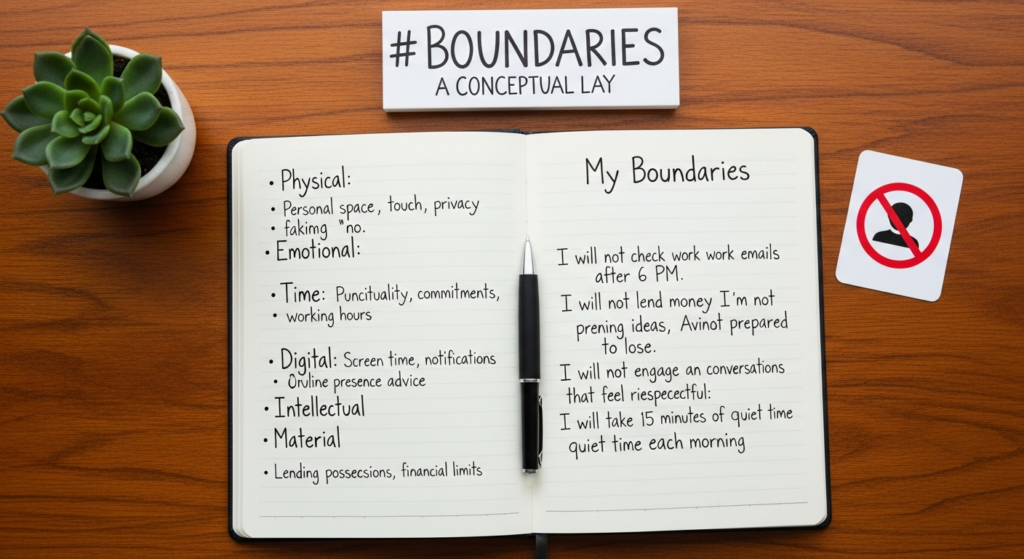
Boundaries come in many forms:
- **Physical Boundaries:** Your personal space, touch, privacy in your home.
- **Emotional Boundaries:** Not taking on others’ feelings, not being responsible for their happiness, protecting yourself from emotional dumping.
- **Time Boundaries:** How much time you dedicate to family calls, visits, or obligations.
- **Financial Boundaries:** Lending money, discussing finances, contributing to shared expenses.
- **Intellectual Boundaries:** Respect for your thoughts, opinions, and beliefs, even if they differ.
- **Digital Boundaries:** How often you respond to texts/emails, what you share on social media, expectations around immediate replies.
Once you’ve identified these areas, you can begin to articulate what a healthy boundary looks like for you in each specific context. For example, if unsolicited advice about your career makes you resentful, your boundary might be: “I will not engage in conversations about my career choices with family members who offer unsolicited advice.”
Crafting Your Communication Strategy: Speaking Your Truth with Grace
This is often the most challenging part, but with a clear strategy, you can communicate your boundaries effectively and respectfully. The goal is clarity, not confrontation.
Key Communication Principles:
- **Choose the Right Time and Place:** Don’t bring up a boundary when emotions are high, or in the middle of a family gathering. Choose a calm, private moment.
- **Use “I” Statements:** Focus on your feelings and needs, rather than blaming. Instead of “You always criticize my choices,” try “I feel dismissed when my choices are questioned.”
- **Be Clear and Concise:** State your boundary simply and directly. Avoid rambling or over-explaining, which can dilute your message.
- **State the Boundary, Not a Demand:** A boundary is about what *you* will do or not do, not what *they* must do. “I need to leave by 9 PM” is a boundary. “You must stop talking about my weight” is a demand. A better boundary would be “I will end the conversation if topics about my weight come up.”
- **Set Expectations for Future Behavior:** “From now on, I won’t be able to discuss my financial situation with you.”
- **Follow Through:** This is crucial. A boundary without follow-through is just an empty statement.
Examples of Boundary Communication:
- **For unsolicited advice:** “Mom, I appreciate your concern, but I’m not looking for advice on my career right now. I’d love to just chat about other things.”
- **For intrusive questions:** “I understand you’re curious, but my partner and I prefer to keep details about our relationship private.”
- **For excessive calls/texts:** “I love hearing from you, but I’m going to limit my phone time to evenings. If you need something urgent, please text.”
- **For financial requests:** “I’m not able to lend money at this time. That’s a boundary I’ve set for myself.”
- **For last-minute demands on your time:** “That sounds lovely, but I already have plans/commitments for that day. I’ll have to miss out this time.”
Remember, you are not responsible for another person’s reaction to your boundary. You are responsible for communicating it kindly and firmly.
Navigating the Inevitable Pushback and Guilt Trip
When you start setting boundaries, especially with family members who are used to the old dynamic, expect resistance. This isn’t necessarily malicious; it often stems from surprise, a fear of change, or even a genuine misunderstanding. Family members might react with:
- **Anger or Offense:** “How could you say that? After all I’ve done for you!”
- **Guilt-Tripping:** “You’re hurting my feelings. Don’t you love me anymore?”
- **Denial:** “I don’t know what you’re talking about, I never do that.”
- **Playing the Victim:** “I guess I’m just a burden to you now.”
- **Ignoring the Boundary:** Continuing the behavior as if you never spoke.
How to Respond to Pushback:
- **Stay Calm and Reiterate:** “I understand this might be new, but this is important for me. I’m not trying to hurt you; I’m setting a boundary for my well-being.”
- **Validate Their Feelings (Without Giving In):** “I hear that you’re disappointed, and I’m sorry if that’s how you feel. My boundary still stands.”
- **Don’t Justify, Argue, or Defend Excessively:** The more you explain, the more there is to argue about. A simple, firm statement is often best.
- **Give Them Space:** Sometimes, family members need time to process. End the conversation if it becomes unproductive.
- **Prepare for Guilt:** Family can be experts at guilt-tripping. Remind yourself that setting boundaries is an act of self-preservation, not selfishness. You have a right to your own space and needs.
It takes courage to stand firm, but each time you do, you reinforce your self-respect and teach others how to treat you.
Consistency is Key: Reinforcing Your Boundaries Over Time
Think of boundaries not as a one-time declaration, but as an ongoing practice. Just like a garden needs continuous weeding and tending, your boundaries need consistent reinforcement. Family members may “test” your new boundaries, sometimes unconsciously, just to see if they’re real. This is where your commitment truly matters.
If a boundary is crossed, address it promptly and calmly. For example:
- If a parent brings up a forbidden topic: “Mom, remember we talked about not discussing my weight? I’m going to change the subject now.” Or, “If this topic comes up again, I’ll need to end the call.”
- If a sibling shows up unannounced after you requested calls first: “I love seeing you, but as I mentioned, I really need a heads-up before you visit. Next time, please call first.”
- If a relative continues to ask for money after you’ve said no: “I’ve already told you my decision on this. My answer hasn’t changed.”
The table below illustrates the shift in approach and outcome when you move from a boundary-less existence to one with clear, consistently enforced boundaries:
| Aspect | Life Before Boundaries | Life After Setting Boundaries |
|---|---|---|
| **Emotional State** | Resentful, drained, anxious, guilty, overwhelmed | Peaceful, empowered, respected, calm, grounded |
| **Communication Style** | Passive, indirect, conflict-avoidant, reactive | Clear, assertive, direct, proactive, honest |
| **Time & Energy** | Overcommitted, stretched thin, constantly available | Purposeful, self-prioritized, energized, focused |
| **Relationship Quality** | Strained, superficial, built on obligation, dependent | Authentic, mutually respectful, healthier, independent |
| **Self-Esteem** | Low, feeling taken advantage of, people-pleasing | High, confident, self-respecting, empowered |
Consistency teaches others that you mean what you say and that your boundaries are non-negotiable. It might feel uncomfortable at first, but with each consistent action, you build stronger, more respectful relationships and a more peaceful life for yourself.
Tailoring Boundaries for Different Family Dynamics
Not all family relationships are created equal, and neither should your boundaries be. The strategies you employ will likely differ based on the specific family member and your history with them.
1. Parents:
This can be the trickiest, as parents often struggle to see their children as independent adults. They may feel entitled to involvement in your life.
- **With overprotective parents:** “I know you care, but I need to make my own decisions, even if they’re not always perfect. I’ll come to you if I need advice.”
- **With critical parents:** “I need you to know that I’m doing my best, and I’d appreciate your support, not criticism. If we can’t do that, I’ll need to end this conversation.”
- **With parents who drop by unannounced:** “I love seeing you, but my schedule is often packed. Please call or text before you come over so I can make sure I’m available.”
2. Siblings:
Sibling relationships can carry old rivalries or expectations.
- **With a sibling who borrows money constantly:** “I’ve decided I can no longer lend money to family members. It’s a boundary I’ve set for my own financial well-being.”
- **With a gossiping sibling:** “I’m not comfortable talking about [another family member’s private life]. Let’s talk about something else.”
- **With a sibling who constantly compares:** “My path is different from yours/theirs, and I’m happy with where I am. I’d appreciate it if we didn’t compare.”
3. In-Laws:
Navigating your partner’s family requires a united front with your partner.
- **With intrusive in-laws:** Your partner should ideally be the one to set the boundary. “My partner and I have decided we’re going to make our own decisions about [how we raise our kids/our holidays]. We appreciate your input, but we’ve got this.”
- **For holiday expectations:** “We understand you’d love for us to be there, but this year we’ve decided to [stay home/visit my family]. We’d love to see you on [another date].”
4. Extended Family:
Often encountered at larger gatherings, boundaries here might be about managing conversations.
- **For political discussions:** “I prefer not to discuss politics at family gatherings. Let’s enjoy our time together.”
- **For unsolicited advice about having children/getting married:** “My partner and I are happy with our choices, and we’ll share any news when we’re ready.”
Remember, the best boundaries are those you and your partner (if applicable) present as a united front, especially when dealing with in-laws or shared family. This reinforces the idea that you are a team.
The Transformative Power of Healthy Boundaries in Your Life
While the process of setting boundaries can feel daunting, the rewards are immense and long-lasting. By 2026, you could be living a life where you experience:
- **Improved Mental and Emotional Well-being:** Reduced stress, anxiety, and resentment. A greater sense of peace and control over your own life. You’ll feel less drained and more energized.
- **Stronger, More Authentic Relationships:** When you set boundaries, you teach others how to respect you. This often leads to relationships based on genuine connection and mutual respect, rather than obligation or fear. People who truly love and value you will respect your boundaries, even if it takes them time to adjust.
- **Increased Self-Respect and Confidence:** Each boundary you set is an act of self-care and self-respect. This builds your confidence and reinforces your belief in your own worth and needs.
- **More Time and Energy for Your Priorities:** By protecting your time and energy, you create space for your career goals, hobbies, friendships, and personal growth. This means more focus on what truly matters to you.
- **A Clearer Sense of Identity:** Without the constant pressure to conform to others’ expectations, you gain a stronger sense of who you are and what you truly want.
Psychologist Dr. Nedra Glover Tawwab, author of “Set Boundaries, Find Peace,” emphasizes that “Healthy boundaries are about knowing and communicating what’s okay and what’s not okay.” This simple yet profound truth can revolutionize your relationships and your life. Embracing this principle means stepping into a future where your relationships are sources of joy and support, not obligation and depletion.
When to Seek External Support: Don’t Go It Alone
Sometimes, setting boundaries with family can be incredibly challenging, especially if there’s a history of dysfunction, manipulation, or abuse. If you find yourself struggling despite your best efforts, or if family reactions are particularly severe or unsupportive, it’s a sign to seek professional help.
Consider reaching out to:
- **A Therapist or Counselor:** A mental health professional can provide strategies, support, and a safe space to process your feelings. They can help you understand family dynamics, practice communication techniques, and navigate emotional fallout.
- **A Life Coach:** A coach specializing in relationships or personal development can help you clarify your goals, build confidence, and hold you accountable as you implement new boundaries.
- **Support Groups:** Connecting with others who share similar experiences can be incredibly validating and provide a sense of community and shared wisdom.
Remember, seeking support is not a sign of weakness; it’s a sign of strength and a commitment to your own well-being. By 2026, let’s normalize asking for help when we need it, especially when navigating complex family dynamics.
Key Takeaways
- **Boundaries are Self-Care:** They are essential for your mental, emotional, and physical well-being, preventing resentment and burnout.
- **Know Your Needs:** Introspect to identify your personal non-negotiables and areas where you feel drained or disrespected.
- **Communicate Clearly:** Use “I” statements, be direct yet kind, and choose appropriate times for conversations about boundaries.
- **Prepare for Pushback:** Expect resistance, guilt-tripping, or denial, and learn to respond calmly and consistently without over-explaining.
- **Consistency is Crucial:** Reinforce your boundaries every time they are tested to establish new, healthier patterns in your family relationships.
Frequently Asked Questions
What if my family gets really angry or upset when I set boundaries?
It’s common for family members to react with anger or upset, especially if they’re not used to you setting limits. Remember that their reaction is their responsibility, not yours. Stay calm, reiterate your boundary clearly without over-explaining or justifying, and give them space. You can say, “I understand you’re upset, but this is important for me, and my boundary stands.”
Is it ever too late to start setting boundaries with family?
Absolutely not! It’s never too late to work towards healthier relationships and prioritize your well-being. While it might take more time and effort to shift long-standing dynamics, starting now will lead to a more peaceful and authentic future. Every step forward is progress.
How do I deal with guilt after setting a boundary?
Guilt is a common emotion, especially for women who are conditioned to prioritize others. Acknowledge the feeling without letting it dictate your actions. Remind yourself that setting boundaries is an act of self-love, not selfishness, and that it ultimately leads to healthier relationships for everyone involved. Journaling, talking to a trusted friend, or seeking professional support can help process these feelings.
What’s the difference between a boundary and a demand?
A boundary is about what *you* will do or not do, or what *you* will allow or not allow in your space and life. It focuses on your actions and limits. For example, “I will end the call if you start criticizing my choices.” A demand, on the other hand, tries to control someone else’s behavior. For example, “You must stop criticizing my choices.” While you can express a preference for their behavior, a true boundary empowers you to respond to their actions.
How can I set boundaries during holidays or special occasions?
Holidays can be particularly challenging. Plan ahead and communicate your boundaries clearly before the event. For example, “We’ll be able to visit for a few hours on Christmas Day, but we’ll need to leave by X time.” Or, “We’ve decided to host this year, so we won’t be traveling.” Be prepared for pushback, and remember that it’s okay to prioritize your peace and well-being even during festive times.
As you step into 2026 and beyond, remember that setting boundaries with family isn’t about creating distance; it’s about fostering respect and creating space for genuine connection. It’s a powerful act of self-advocacy that allows you to thrive, not just survive, in your relationships. You deserve to feel respected, understood, and at peace within your family and your own life. Embrace this journey with courage and compassion, and watch as your relationships transform into sources of true joy and support.
Article written by Dr. Eleanor Vance, Licensed Clinical Psychologist and Relationship Expert.