

Breaking Free: Your Ultimate Guide to Stopping People-Pleasing as a Woman in 2026
In 2026, as we continue to push boundaries and redefine what it means to be a powerful, authentic woman, the time is now to shed the burden of people-pleasing. This isn’t just about saying “no” more often; it’s about a profound shift in mindset, a journey towards self-respect, and a commitment to living a life that truly reflects who you are. This guide is your roadmap to understanding, dismantling, and ultimately stopping people-pleasing, empowering you to reclaim your time, energy, and peace of mind. Let’s embark on this transformative journey together.
Understanding People-Pleasing: What It Is and Why We Do It
People-pleasing, at its core, is the tendency to prioritize the needs, desires, and approval of others over your own. It’s often driven by a deep-seated fear of rejection, conflict, or disappointing those around us. For women, this behavior is particularly prevalent, often stemming from a complex interplay of upbringing, cultural conditioning, and gender roles that traditionally encourage nurturing, self-sacrifice, and harmony at all costs.
You might be a people-pleaser if you:
- Constantly seek external validation and approval from others.
- Struggle to say “no” even when you’re overwhelmed or uncomfortable.
- Apologize excessively, even for things that aren’t your fault.
- Avoid conflict at all costs, often at the expense of your own needs.
- Take on more responsibilities than you can handle.
- Feel guilty when you prioritize yourself.
- Adapt your opinions or personality to fit in with different groups.
- Overthink social interactions, constantly replaying conversations to ensure you didn’t offend anyone.
The roots of people-pleasing often run deep. Perhaps you grew up in a household where showing emotions was discouraged, or where your value was tied to your ability to make others happy. Societal messages further reinforce this, subtly telling women that their worth is linked to their agreeableness, kindness, and willingness to serve. These historical and cultural pressures create a powerful, often unconscious, drive to conform and avoid rocking the boat. Understanding these origins isn’t about blaming; it’s about gaining awareness, which is the first crucial step in learning how to stop people pleasing and build a more authentic life.
The Hidden Costs: How People-Pleasing Harms Your Life
Consider these significant costs:
- Burnout and Exhaustion: Constantly overextending yourself, taking on extra tasks, and suppressing your own needs leads to chronic fatigue. Your energy reserves are perpetually depleted, leaving you with little left for yourself or the things you truly care about.
- Resentment and Frustration: Over time, saying “yes” when you mean “no” breeds deep-seated resentment. You might find yourself quietly seething at those you feel you’re constantly serving, leading to strained relationships and a pervasive sense of injustice.
- Loss of Identity and Authenticity: When you continually adapt your opinions, desires, and even your personality to suit others, you lose touch with who you truly are. Your authentic voice gets muffled, and you may find it difficult to identify your own passions and preferences.
- Stagnation in Career and Personal Growth: A fear of challenging the status quo or asking for what you deserve can hinder your professional advancement. You might shy away from leadership roles, avoid negotiating for better pay, or fail to advocate for your ideas, limiting your potential.
- Mental Health Challenges: Research consistently links people-pleasing to increased rates of anxiety, depression, and low self-esteem. A study by Dr. Eleanor Vance, published in the “Journal of Behavioral Psychology” in 2023, indicated that individuals with high people-pleasing tendencies reported a 40% higher incidence of moderate to severe anxiety symptoms compared to those with lower tendencies, largely due to chronic stress and suppressed emotions.
- Strained Relationships: While you might believe people-pleasing strengthens your bonds, it often leads to superficial connections. True intimacy requires authenticity, and if you’re not showing up as your true self, your relationships will lack depth and genuine understanding.
Recognizing these hidden costs is a powerful motivator for change. Understanding the profound impact this behavior has on your life is a critical step in your journey to stopping people-pleasing and embracing a more fulfilling existence.
Identifying Your People-Pleasing Triggers and Patterns
To effectively stop people-pleasing, you first need to become a detective of your own behavior. What situations, people, or emotions tend to trigger your people-pleasing responses? By identifying these patterns, you can interrupt them before they take hold.
Self-Reflection and Journaling Prompts:
Grab a notebook and dedicate some time to exploring these questions. Be honest with yourself, without judgment.
- When do I most often feel compelled to say “yes” when I want to say “no”? (e.g., at work, with family, with specific friends, when asked to volunteer)
- What emotions do I feel right before I people-please? (e.g., anxiety, fear, guilt, a desire to be liked)
- What are my biggest fears if I don’t people-please? (e.g., rejection, conflict, being seen as selfish, disappointing someone)
- Who are the people I most often people-please for? Are there specific power dynamics at play?
- What are the common phrases or excuses I use to justify my people-pleasing behavior?
- How do I feel physically and emotionally after I’ve people-pleased?
- What was my family’s dynamic around expressing needs or saying “no” when I was growing up?
Recognizing the “Why” Behind the “Yes”:
Every “yes” that goes against your true desire has an underlying motivation. Is it a fear of:
- Disappointing Others: You believe your value is tied to meeting others’ expectations.
- Conflict or Confrontation: You avoid any situation that might lead to disagreement.
- Rejection or Abandonment: You fear that if you don’t comply, you’ll be disliked or left out.
- Being Seen as “Bad” or “Selfish”: You internalize societal messages that women should always be accommodating.
- Missing Out (FOMO): You say yes to everything so you don’t miss an opportunity, even if it drains you.
By understanding these deeper motivations, you can begin to challenge them. This self-awareness is your superpower in the journey to stopping people-pleasing. It allows you to pause, acknowledge the trigger, and consciously choose a different response, moving you closer to an authentic and empowered way of living.
Setting Healthy Boundaries: A Core Skill for Self-Respect
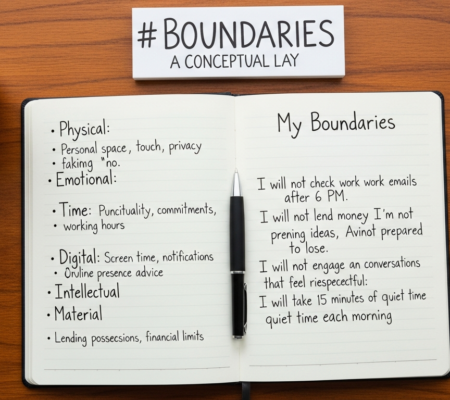
One of the most powerful tools in your arsenal for stopping people-pleasing is the ability to set and maintain healthy boundaries. Boundaries are not about keeping people out; they are about defining what you are and are not comfortable with, communicating your limits, and protecting your energy and well-being. They are an act of self-respect and self-care.
What Are Healthy Boundaries?
Healthy boundaries are clear limits that you establish to protect your physical, emotional, and mental space. They define what you will and won’t accept in your relationships and interactions. They are essential for:
- Preserving your energy and preventing burnout.
- Fostering genuine respect in your relationships.
- Prioritizing your own needs and goals.
- Reducing resentment and improving communication.
- Cultivating a stronger sense of self and agency.
Practical Steps to Set Boundaries:
- Identify Your Limits: Before you can communicate boundaries, you need to know what they are. What makes you feel uncomfortable, drained, or disrespected? This could be related to time, energy, personal space, emotional labor, or communication styles.
- Communicate Clearly and Directly: Use “I” statements to express your needs without blame. Be firm but polite. For example, instead of “You always ask too much of me,” try “I’m unable to take on that extra project right now because my plate is full.”
- Start Small: Begin by setting boundaries in less intimidating situations. Perhaps with a casual acquaintance or for a small request. As you gain confidence, you can tackle more challenging scenarios.
- Be Prepared for Pushback: Not everyone will react positively to your new boundaries, especially if they’re used to you being a people-pleaser. Some may test your limits, express disappointment, or even try to guilt-trip you. This is a normal part of the process, and it’s crucial to stand firm.
- Practice Saying “No”: “No” is a complete sentence. You don’t always need a lengthy explanation. Simple phrases like “No, I can’t,” “That doesn’t work for me,” or “I’m not available” are perfectly acceptable.
- Follow Through: Once you’ve set a boundary, it’s vital to uphold it. Inconsistency sends mixed signals and undermines your efforts.
HTML Comparison Table: People-Pleasing vs. Boundary-Setting Responses
| Situation | People-Pleasing Response | Boundary-Setting Response |
|---|---|---|
| A colleague asks you to stay late, again. | “Oh, sure, I guess I can stay. No problem.” (While feeling annoyed) | “I understand this is urgent, but I have a prior commitment tonight. I can help first thing tomorrow.” |
| A friend calls for a long vent session when you’re busy. | “Of course, tell me everything!” (Even if you’re rushing) | “I’d love to hear about it, but I only have 15 minutes right now. Can I call you back later this evening?” |
| Your family expects you to host every holiday. | “It’s fine, I’ll manage.” (Despite feeling overwhelmed) | “I enjoy hosting, but I need a break this year. How about we try a potluck at someone else’s place, or I can help organize catering?” |
| Someone gives unsolicited advice about your life choices. | “Hmm, that’s an interesting idea.” (Even if you disagree) | “Thanks for your input, but I’m comfortable with the decision I’ve made.” |
Setting boundaries is an ongoing practice, not a one-time event. It requires courage, consistency, and a deep commitment to your own well-being. As you get better at it, you’ll find that your relationships become healthier, and your self-respect grows exponentially.
Cultivating Self-Compassion and Inner Validation
At the heart of people-pleasing lies a reliance on external validation. We seek approval, praise, and acceptance from others because, often, we haven’t learned to give it to ourselves. To truly stop people-pleasing, you must shift your focus from seeking worth outside yourself to cultivating a deep well of self-compassion and inner validation.
Moving Away from External Validation:
Imagine your self-worth as a sturdy tree. If it relies on external validation, its roots are shallow, easily swayed by the winds of others’ opinions. When you cultivate inner validation, you plant that tree deep within your own soil, making it strong and resilient, impervious to external storms.
- Recognize the Cycle: Understand that constantly seeking external praise is a never-ending cycle. No amount of “likes,” compliments, or approvals will ever truly fill the void if you don’t believe in your own worth.
- Question Your Motives: Before you act, ask yourself: “Am I doing this because I genuinely want to, or because I’m seeking approval?” This pause creates space for a conscious choice.
- Celebrate Small Victories: Acknowledge and celebrate moments when you prioritize your own needs or express an authentic opinion, even if it’s small.
Practices for Self-Compassion:
Self-compassion isn’t self-pity; it’s treating yourself with the same kindness, understanding, and care you would offer a dear friend. Research by Dr. Kristin Neff, a leading expert in self-compassion, consistently shows its profound benefits for mental well-being, resilience, and reducing anxiety. A 2024 study published in “Psychological Science” demonstrated that individuals practicing self-compassion techniques daily for eight weeks reported a 25% increase in emotional regulation and a significant decrease in self-criticism.
- Mindful Self-Awareness: Notice your thoughts and feelings without judgment. When you catch yourself being self-critical, simply observe it.
- Common Humanity: Remind yourself that suffering, imperfection, and making mistakes are part of the human experience. You are not alone in your struggles.
- Self-Kindness: Instead of harsh self-criticism, offer yourself warmth and understanding. What would you say to a friend in a similar situation? Speak to yourself that way.
- Self-Compassion Break: When you’re feeling overwhelmed or inadequate, try this three-step process:
- “This is a moment of suffering.” (Mindfulness)
- “Suffering is a part of life.” (Common Humanity)
- “May I be kind to myself.” (Self-Kindness)
Cultivating self-compassion and inner validation is a transformative journey. It empowers you to break free from the chains of people-pleasing by building an unshakable foundation of self-worth from within. This internal shift is essential for any woman truly committed to stopping people pleasing and living authentically.
Communicating Your Needs: Assertiveness without Aggression
Once you understand your triggers and begin to cultivate self-compassion, the next vital step in stopping people-pleasing is to learn how to effectively communicate your needs. This means embracing assertiveness – a powerful middle ground between passive deference and aggressive demands.
Understanding Communication Styles:
- Passive Communication: You suppress your own needs and desires, allowing others to walk all over you. This often leads to resentment and a feeling of being unheard. (e.g., “Whatever you want is fine.”)
- Aggressive Communication: You express your needs in a way that disrespects or demeans others, often through yelling, criticism, or intimidation. This alienates people and creates conflict. (e.g., “You always make me do everything! I’m not doing that!”)
- Assertive Communication: You express your needs, feelings, and opinions clearly, respectfully, and directly, while also respecting the rights and feelings of others. This fosters healthy relationships and mutual understanding. (e.g., “I understand you need help, but I’m unable to take that on right now.”)
The goal is to move from passive responses to assertive ones. This isn’t about being rude or selfish; it’s about being honest and respectful – both to yourself and to others.
Techniques for Assertive Communication:
- Use “I” Statements: Frame your communication around your feelings and needs, rather than blaming others.
- Instead of: “You always dump your work on me.”
- Try: “I feel overwhelmed when I take on extra tasks, and I need to prioritize my current workload.”
- Be Clear and Direct: Avoid vague language, hints, or hoping others will read your mind. State exactly what you need or what your boundary is.
- Instead of: “I guess I could probably make it work…”
- Try: “I’m not available at that time.”
- Practice Active Listening: Assertiveness is a two-way street. Listen to understand the other person’s perspective, even if you don’t agree. This shows respect and can de-escalate potential conflict.
- Offer Alternatives (if appropriate): Sometimes, you can say “no” to a request but offer a compromise. This can soften the refusal and show willingness to help in other ways.
- “I can’t lead that project, but I can contribute to the research phase.”
- “I can’t meet for coffee today, but I’m free for a quick call tomorrow.”
- Manage Your Tone and Body Language: Speak calmly and confidently. Maintain eye contact. Your non-verbal cues are just as important as your words. A confident posture reinforces your assertive message.
- Give Yourself Time: You don’t have to respond immediately. It’s perfectly acceptable to say, “Let me check my schedule and get back to you,” or “I need a moment to think about that.” This prevents impulsive, people-pleasing responses.
Learning assertive communication is a skill that improves with practice. Each time you successfully communicate your needs, you build confidence and reinforce your commitment to stopping people-pleasing and living a life where your voice is heard and valued.
Dealing with Guilt and the Fear of Disappointing Others
As you begin to implement strategies for stopping people-pleasing, you’ll inevitably encounter two powerful adversaries: guilt and the fear of disappointing others. These emotions are deeply ingrained for many women and can be incredibly challenging to navigate. However, understanding and managing them is crucial for sustainable change.
Normalizing Guilt and Reframing It:
When you start saying “no” or prioritizing your needs, a wave of guilt can wash over you. This is a common, often automatic response, especially if you’ve been conditioned to believe that your worth is tied to making others happy. Instead of letting guilt paralyze you, try to reframe it:
- Acknowledge the Feeling: Don’t try to suppress guilt. Simply observe it. “I’m feeling guilty right now because I said no to my friend.”
- Examine Its Source: Is this guilt genuine, stemming from truly harming someone, or is it a conditioned response from a lifetime of people-pleasing? Often, it’s the latter.
- Reframe Guilt as Growth: See guilt as a signal that you are challenging old patterns. It means you’re stepping outside your comfort zone and growing. This discomfort is a sign of progress, not failure.
- Separate Intent from Impact: Your intention might be to protect your energy, not to harm someone. While your “no” might cause temporary disappointment, it’s not your job to manage others’ emotional reactions to your healthy boundaries.
Strategies to Manage the Fear of Disapproval:
- Understand You Can’t Control Others’ Reactions: You are responsible for your actions and intentions, not for how others choose to react to them. Some people might be genuinely disappointed, while others might even respect your newfound assertiveness. Their reaction is their responsibility, not yours.
- Challenge Catastrophic Thinking: Our minds often jump to worst-case scenarios (“If I say no, they’ll hate me forever!”). Ask yourself: “Is that truly realistic? What’s the most likely outcome?” Usually, the reality is far less dramatic.
- Remember Your “Why”: Reconnect with the reasons you’re stopping people-pleasing. What are the costs if you continue? What are the benefits of changing? This reinforces your resolve.
- Build a Support System: Talk to trusted friends, family, or a therapist who understands your journey. Sharing your fears and successes can provide validation and encouragement.
- Focus on Self-Respect: When the fear of disapproval creeps in, remind yourself that prioritizing your well-being is an act of self-respect. You are teaching others how to treat you.
- Practice Small Rejections: Start with low-stakes “no’s.” Decline an optional social invitation, say you can’t bring a dish to a potluck, or tell a telemarketer “no thank you.” Each small success builds your “no” muscle.
Dealing with guilt and fear is an ongoing process. Be patient and kind to yourself. Each time you choose your well-being over people-pleasing, you are reinforcing a new, healthier pattern and moving closer to an authentic, empowered you.
Practical Steps to Start Your Journey Today
Now that you have a deeper understanding of people-pleasing, its costs, and the tools to combat it, it’s time to put theory into practice. Remember, this is a journey, not a destination. Start small, be patient with yourself, and celebrate every step forward. Here’s how to begin your transformation and truly embody how to stop people pleasing as a woman in 2026:
- Start with Low-Stakes Situations: Don’t try to set a major boundary with your most demanding boss or family member first. Practice saying “no” to minor requests or in less emotionally charged situations. For example:
- Decline an optional social media request.
- Say “no thank you” to an extra condiment at a restaurant if you don’t want it.
- Tell a friend you’re unavailable for a casual chat right now, but can connect later.
- Use the “Pause and Reflect” Method: When asked to do something, resist the urge to immediately say “yes.” Instead, say: “Let me check my calendar and get back to you,” or “I need a moment to think about that.” This gives you space to assess your capacity and true desire without pressure.
- Set One Small Boundary This Week: Identify one area where you consistently overextend yourself. It could be saying “no” to an extra task at work, declining a social invitation you don’t want to attend, or setting a time limit for a phone call. Commit to upholding that one boundary.
- Practice “I” Statements: Consciously incorporate “I feel,” “I need,” and “I want” into your conversations. This helps you communicate your needs clearly and takes the focus off what others are doing wrong.
- Delegate and Ask for Help: You don’t have to do everything yourself. Identify tasks you can delegate at work or ask for help with at home. This is a powerful way to release the burden of people-pleasing and allow others to contribute.
- Prioritize Self-Care Non-Negotiables: Schedule your self-care activities (exercise, quiet time, hobbies) into your calendar and treat them as non-negotiable appointments. When a request conflicts, you can genuinely say, “I have another commitment at that time.”
- Seek Support: Share your journey with a trusted friend, partner, or consider working with a therapist or coach who specializes in assertiveness and boundary setting. External support can provide accountability and valuable insights.
- Journal Your Progress and Challenges: Regularly reflect on your experiences. What went well? What was challenging? How did you feel? This helps you learn, adapt, and reinforce new behaviors.
Every small step you take to prioritize yourself is a victory. This guide on how to stop people pleasing for women in 2026 is designed to empower you to create a life where your voice is heard, your needs are met, and your authenticity shines through. You deserve to live a life that truly makes you happy, not just one that makes everyone else happy.
Key Takeaways
- People-pleasing is a learned behavior, often rooted in fear of rejection and societal expectations for women, leading to burnout and loss of self.
- Its hidden costs include chronic stress, resentment, diminished self-worth, and hindered personal and professional growth.
- Identifying your specific triggers and underlying fears (e.g., fear of disappointment, conflict) is crucial for conscious change.
- Setting clear, healthy boundaries using assertive “I” statements is fundamental to reclaiming your time, energy, and self-respect.
- Cultivating self-compassion and inner validation shifts your reliance from external approval to a stable sense of self-worth, making sustainable change possible.
Frequently Asked Questions
Q: Is people-pleasing always a bad thing?
A: While kindness and helpfulness are positive traits, people-pleasing becomes detrimental when it’s driven by a fear of rejection or a need for external validation, leading to the neglect of your own needs. It’s about the motivation behind the action. Genuinely wanting to help is different from feeling obligated and resentful.
Q: How do I deal with guilt after saying “no”?
A: Guilt is a common reaction, especially initially. Acknowledge the feeling without judgment, remind yourself that it’s a sign of breaking old patterns, and refocus on your “why” – the