

How to Wake Up Early: The Ultimate Guide to Mastering Your Morning Routine
For many, the sound of the alarm clock at 6:00 AM feels less like an invitation and more like an intrusion. We live in a world that increasingly values the “hustle,” yet most of us find ourselves trapped in a cycle of late-night scrolling and morning grogginess. However, waking up early isn’t a superpower reserved for the genetically gifted or the ultra-disciplined; it is a physiological skill that can be cultivated through intentional habit-building. As we move into 2026, the focus of wellness has shifted from sheer productivity to “circadian alignment”—the practice of syncing our internal clocks with the natural world to optimize energy, mood, and cognitive function. Learning how to wake up early is the first step in reclaiming your day, allowing you to move from a state of reactive stress to one of proactive intention. This guide will provide you with a comprehensive roadmap to transform your relationship with the morning and build a routine that sticks.
1. Understanding Your Biological Clock: The Science of Circadian Rhythms
Before you can change when you wake up, you must understand why you sleep. Every human body is governed by a circadian rhythm—an internal 24-hour clock that regulates cycles of alertness and sleepiness by responding to light changes in the environment. This clock is managed by the suprachiasmatic nucleus (SCN) in the brain, which signals the production of hormones like cortisol (to wake you up) and melatonin (to put you to sleep).
One of the biggest misconceptions about waking up early is that it is purely a matter of willpower. In reality, your “chronotype” plays a significant role. Some people are natural “Lions” (early risers), while others are “Wolves” (night owls). If you are a natural night owl trying to become an early bird, you aren’t just fighting a habit; you are fighting your biology. However, biology is plastic. By consistently exposing yourself to bright light in the morning and darkness at night, you can “shift” your SCN.
The goal for 2026 wellness enthusiasts is “Circadian Optimization.” This means not just waking up early, but waking up at the end of a complete sleep cycle (usually 90 minutes). Waking up mid-REM sleep leads to sleep inertia—that heavy, “drugged” feeling that makes you reach for the snooze button. By understanding your rhythm, you can time your wake-up call to coincide with your body’s natural rise in body temperature and cortisol.
2. Mastering the Night Before: The 10-3-2-1-0 Rule
A successful morning begins the night before. You cannot expect to wake up at 5:00 AM feeling refreshed if you were staring at a high-definition monitor until midnight. Preparation is the bridge between the person you are tonight and the person you want to be tomorrow morning.
To streamline this, many habit experts recommend the **10-3-2-1-0 Rule**:
* **10 hours before bed:** No more caffeine. It takes this long for caffeine to fully clear your bloodstream.
* **3 hours before bed:** No more food or alcohol. Digestion and alcohol metabolism interfere with deep sleep stages.
* **2 hours before bed:** No more work. Give your brain time to decompress and exit “problem-solving” mode.
* **1 hour before bed:** No more blue light (screens). Blue light inhibits melatonin production, tricking your brain into thinking it’s still daytime.
* **0:** The number of times you will hit the snooze button in the morning.
In addition to this rule, create a “Shutdown Ritual.” This might include laying out your workout clothes, journaling to clear “brain dump” anxieties, and dimming the lights in your home. By reducing the number of decisions you have to make in the morning, you lower the “activation energy” required to get out of bed. If your gym clothes are already on the floor next to your bed, the path of least resistance leads toward your goals rather than back under the covers.
3. The Art of the Gentle Wake-Up: Breaking the Snooze Habit
The snooze button is the enemy of a productive life. When you hit snooze, you drop back into a new sleep cycle that you have no hope of finishing. This results in fragmented sleep that leaves you more tired than if you had simply gotten up.
To break the habit, employ the **”Five-Second Rule.”** The moment you wake up and the urge to stay in bed hits, count backward: 5-4-3-2-1-GO. On “GO,” you physically move your body. Physical movement breaks the mental loop of negotiation.
Another effective strategy is “environmental design.” Move your alarm clock or phone to the other side of the room. This forces you to physically stand up and walk to turn it off. Once you are upright, the battle is 80% won. In 2026, many are turning to “Sunrise Alarms”—clocks that gradually brighten the room with warm light 30 minutes before the audio alarm sounds. This mimics a natural sunrise, gently suppressing melatonin and raising your core temperature, making the transition to wakefulness much less jarring than a traditional blaring alarm.
4. Building a Morning Routine You Actually Love
If your only reason for waking up early is to do chores or start work immediately, your brain will naturally rebel. To make a morning habit sustainable, you must incorporate elements of pleasure and “habit stacking.” Habit stacking, a concept popularized by James Clear, involves anchoring a new habit (waking up early) to an existing or enjoyable one.
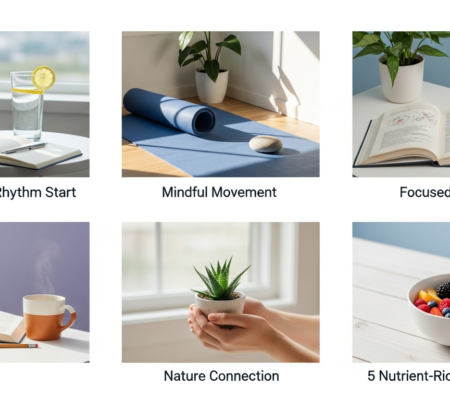
Your morning routine should focus on three pillars: **Hydration, Light, and Movement.**
* **Hydration:** After 7-8 hours of sleep, your body is dehydrated. Drink 16 ounces of water before you touch coffee. This jumpstarts your metabolism and increases cognitive clarity.
* **Light:** As mentioned, light is the primary driver of your circadian rhythm. Try to get 5-10 minutes of direct sunlight (not through a window) within the first 30 minutes of waking. This sets a timer for melatonin production to begin roughly 14 hours later.
* **Movement:** You don’t need a grueling 90-minute workout. Five minutes of stretching, a brisk walk, or a short yoga flow increases blood flow to the brain and signals to your nervous system that the day has begun.
The most successful routines in 2026 are those that prioritize mindfulness over metrics. Instead of checking emails immediately—which puts your brain in a reactive, “fight or flight” state—spend ten minutes reading, meditating, or simply sitting with your thoughts. This creates a psychological “buffer zone” that carries a sense of calm throughout the rest of your day.
5. Overcoming Obstacles and Staying Consistent
The biggest threat to a new early-rising habit is the “Weekend Reset.” Many people follow a strict 6:00 AM schedule Monday through Friday, only to sleep in until 10:00 AM on Saturday and Sunday. This creates a phenomenon known as “Social Jetlag.” By shifting your wake-up time by four hours, you are essentially giving your body the physiological equivalent of flying from New York to London and back every weekend. Your internal clock becomes confused, leading to the dreaded “Monday Morning Blues.”
To stay consistent, try to keep your wake-up time within a 60-minute window, even on weekends. If you stay up late for a social event, it is often better to wake up at your usual time and take a 20-minute “power nap” in the early afternoon than to sleep in for three hours and disrupt your rhythm.
Furthermore, expect “failure” and plan for it. There will be nights when the baby cries, the flight is delayed, or you simply can’t fall asleep. When this happens, don’t abandon the habit entirely. Forgive yourself, acknowledge the outlier, and get back on track the very next day. Habit building is about the average of your actions over months, not the perfection of your actions over days.
6. Advanced Strategies and Tech Integration for 2026
As we look toward 2026, the intersection of technology and wellness offers new ways to optimize our mornings. Wearable technology has advanced beyond simple step counting to provide deep insights into “Recovery Scores.” By monitoring your Heart Rate Variability (HRV) and Resting Heart Rate (RHR), modern wearables can tell you if your body is actually ready for a high-intensity morning or if you should opt for a slower, restorative start.
Smart home integration is also a game-changer. You can now program your thermostat to increase the temperature by two degrees 30 minutes before your alarm, which naturally signals the body to wake up. Similarly, smart bulbs can be set to transition from amber tones in the evening to bright, “cool blue” tones in the morning to regulate your hormones automatically.
However, even with the best tech, the most “advanced” strategy remains the most ancient: Listen to your body. True wellness in 2026 is about personalization. If you find that waking at 5:00 AM makes you miserable and unproductive despite months of trying, perhaps your optimal window is 6:30 AM. The goal is not to join an arbitrary “5 AM Club,” but to find the “Golden Hour” where your personal productivity and peace of mind intersect.
***
FAQ: Frequently Asked Questions
**Q1: How long does it take to actually become an “early bird”?**
Research suggests that it takes anywhere from 21 to 66 days to form a new habit, but “entraining” your circadian rhythm usually takes about two weeks of strict consistency. You will likely feel tired for the first 10 days, but by day 14, your body will begin to naturally drop its core temperature and produce cortisol in alignment with your new schedule.
**Q2: Is it okay to catch up on sleep with a nap?**
Yes, but timing is crucial. To avoid interfering with your nighttime sleep, keep naps under 30 minutes and take them before 3:00 PM. A “NASA power nap” (roughly 26 minutes) can improve alertness by up to 34% without causing sleep inertia.
**Q3: Does caffeine really matter that much?**
Caffeine works by blocking adenosine receptors in the brain. Adenosine is a chemical that builds up throughout the day to create “sleep pressure.” If you consume caffeine too late in the day, it blocks the signal that you are tired, even if the caffeine’s “buzz” has worn off. This leads to poor sleep quality, making it harder to wake up early the next day.
**Q4: What if I share a bed with someone who has a different schedule?**
This is a common challenge. Communication and environmental control are key. Use a vibrating alarm on a smartwatch to wake up without disturbing your partner. If you need to turn on lights, use a small reading lamp or headlamp rather than the overhead lights. Respecting their rhythm while maintaining yours is essential for long-term success.
**Q5: Can supplements help me wake up early?**
While some people use melatonin to “reset” their clock after travel, it should not be a long-term crutch. Instead, focus on magnesium glycinate in the evening, which supports muscle relaxation and nervous system calm. Always consult with a healthcare professional before starting new supplements.
***
Conclusion: The Long-Term Reward of the Early Hour
Waking up early is more than just a productivity hack; it is an act of self-respect. By choosing to rise before the demands of the world—emails, family obligations, and social media—begin to pull at your attention, you are gifting yourself a period of “sacred time.” This is the time when you can cultivate the habits that define who you are: the books you read, the way you move, and the intentions you set.
As you implement these strategies in 2026, remember that the goal is progress, not perfection. There will be cold winter mornings where the bed feels far more inviting than the treadmill, and that is okay. The transformation happens in the consistent choice to try again. By aligning your biology with your behavior and your environment with your intentions, you will find that waking up early isn’t a chore—it’s the competitive advantage that allows you to live your life by design rather than by default. Start tomorrow. Set the alarm, move it across the room, and welcome the dawn.