

Mastering the Bounce Back: Building Resilience Through Daily Habits
Life in 2026 moves at a velocity that can often feel overwhelming. From the shifting landscape of global work cultures to the constant stream of digital information, the modern individual is under more psychological pressure than ever before. In this environment, resilience is no longer just a “nice-to-have” personality trait; it is an essential survival skill. Resilience is the emotional and mental “immune system” that allows you to navigate setbacks, grief, and stress without breaking. Contrary to popular belief, resilience isn’t something you are born with—it is a capacity built through the compounding power of daily habits. By integrating specific, intentional routines into your life, you train your brain and body to stay steady when the ground shifts. This guide explores how to construct a lifestyle that fosters enduring strength, ensuring that when challenges arise, you don’t just survive—you evolve.
The Science of Resilience: Why Small Habits Lead to Big Strength
To understand how habits build resilience, we must first look at neuroplasticity. Our brains are remarkably adaptable, capable of rewiring themselves based on repeated behaviors and thought patterns. When we practice “resilient” habits, we are essentially strengthening the neural pathways associated with the prefrontal cortex—the part of the brain responsible for executive function and emotional regulation—while dampening the overactivity of the amygdala, the brain’s “alarm system.”
Resilience is closely tied to the concept of “allostatic load,” which refers to the wear and tear on the body that accumulates as an individual is exposed to repeated or chronic stress. Daily habits act as a pressure-release valve. By engaging in small, restorative actions every day, you lower your baseline stress levels. This means that when a major crisis hits, your “container” for stress isn’t already full. You have the margin required to process the situation rationally rather than reacting from a place of depletion. Building resilience is less about the intensity of your efforts and more about the consistency of your practice.
Morning Foundations: Setting the Tone for Emotional Stability
The first hour of your day is the most critical window for building resilience. How you start your morning dictates your “reactive threshold” for the rest of the day. If the first thing you do is check emails or scroll through social media, you are immediately putting your brain into a reactive, defensive state. You are letting the world’s priorities dictate your internal weather.
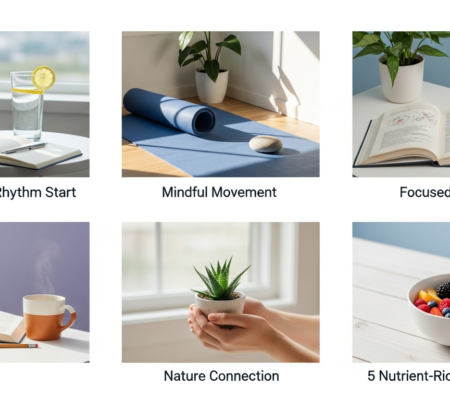
A resilient morning routine focuses on proactive grounding. This doesn’t require a two-hour meditation retreat. Instead, focus on three pillars: sunlight, movement, and mindfulness.
1. **Sunlight:** Getting natural light in your eyes within 30 minutes of waking regulates your circadian rhythm and optimizes cortisol production. This helps you feel alert in the morning and ensures better sleep at night—a cornerstone of resilience.
2. **Movement:** Even five minutes of stretching or a brisk walk releases endorphins and BDNF (brain-derived neurotrophic factor), which supports cognitive flexibility.
3. **Mindfulness:** Setting a “Daily Intention” rather than a “To-Do List” allows you to decide *who* you want to be (e.g., patient, focused, calm) regardless of what happens. This creates an internal anchor that external chaos cannot easily move.
Cognitive Reframing: The Habit of Mindful Perspective
Resilient people do not experience fewer problems; they interpret them differently. This is known as cognitive reframing. The habit of reframing involves consciously challenging the initial, often catastrophic, narrative your brain creates during a setback.
One powerful daily habit is the “Optimistic Audit.” At the end of each day, or during a stressful moment, ask yourself: *Is this situation permanent, pervasive, or personal?* Non-resilient thinking assumes a setback is forever (permanent), affects everything in life (pervasive), and is entirely their fault (personal). Resilient thinking recognizes that the problem is temporary, specific to one area of life, and often influenced by external factors.
By practicing this daily, you move away from a “victim” mindset toward an “agent” mindset. You begin to see challenges as “puzzles to be solved” rather than “verdicts on your worth.” Over time, this becomes your default setting, allowing you to maintain a sense of hope even in the middle of a storm.
Physical Resilience: Supporting the Biological Engine
We often treat the mind and body as separate entities, but resilience is fundamentally biological. A body that is chronically inflamed, sleep-deprived, and malnourished has very little capacity to handle emotional stress. Therefore, resilience habits must include physical maintenance.
Sleep is the non-negotiable foundation of mental toughness. During deep sleep, the brain’s glymphatic system flushes out metabolic waste, and the emotional centers of the brain are recalibrated. Missing just two hours of sleep can significantly increase emotional reactivity and decrease the ability to solve complex problems.
Furthermore, the habit of “Voluntary Discomfort” can boost resilience. This could mean taking a cold shower for 60 seconds, lifting weights, or fasting for a specific window. When you choose to endure minor physical discomfort in a controlled environment, you are training your nervous system to stay calm under pressure. You are teaching your body that “I am uncomfortable, but I am safe,” which is the core realization needed during any life crisis.
Social Connectivity: Building the Safety Net
While resilience is an internal quality, it is heavily bolstered by external connections. One of the most dangerous habits during times of stress is isolation. Human beings are neurobiologically wired for connection; our nervous systems co-regulate with others.
A key daily habit for resilience is “Active Outreach.” This involves making one meaningful connection a day. It doesn’t have to be a deep, hour-long therapy session. It could be a five-minute phone call to a friend, a genuine compliment to a colleague, or a brief conversation with a neighbor. These micro-interactions reinforce the feeling that you are part of a tribe.
In 2026, as digital interactions often replace physical ones, the habit of seeking “high-fidelity” connection—voice or face-to-face—is vital. Knowing that you have a support system reduces the “threat” level of any given challenge. You aren’t just facing the world with your own two hands; you are supported by a web of relationships. This social capital is often what prevents a setback from becoming a breakdown.
The Power of the “Reset” Habit: Navigating Mid-Day Stress
Resilience isn’t just about how you start and end your day; it’s about how you manage the “messy middle.” Many people let stress accumulate like a snowball throughout the day, reaching 5:00 PM in a state of total exhaustion. Resilient individuals use “Micro-Breaks” or “Reset Habits” to prevent this accumulation.
A highly effective habit is the “90-Minute Rhythm.” The human brain works in ultradian cycles, typically losing focus and increasing stress markers after about 90 minutes of high-intensity work. By taking a 5-minute “resilience break” every hour and a half—stepping away from the screen, practicing box breathing (inhale for 4, hold for 4, exhale for 4, hold for 4), or simply standing up—you reset your nervous system.
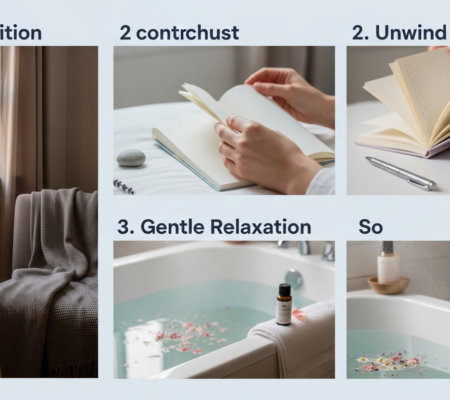
Another powerful tool is “The Shutdown Ritual.” At the end of your workday, physically and mentally close the door on your professional tasks. This might involve writing down the top three things you need to do tomorrow to get them out of your head, or a symbolic gesture like changing your clothes or taking a walk. This habit ensures that you aren’t carrying “residue stress” into your personal life, allowing your resilience reserves to recharge for the following day.
FAQ: Frequently Asked Questions About Building Resilience
#
1. Is resilience something you’re born with, or can anyone learn it?
While some people may have a genetic predisposition toward a more stable temperament, the vast majority of resilience is learned. It is a set of skills and behaviors that can be developed through practice. Think of it like physical fitness; while some have better “genetics,” anyone can get stronger by lifting weights consistently.
#
2. How long does it take for these habits to start making a difference?
Neuroscience suggests that it takes anywhere from 18 to 66 days to form a new habit, depending on its complexity. However, many people report feeling a difference in their “stress tolerance” within just two weeks of consistent morning sunlight and mindful breathing.
#
3. Can you be too resilient?
There is a concept known as “hyper-resilience” or “toxic resilience,” where a person suppresses their emotions to keep going at all costs. True resilience is not about “toughing it out” or ignoring pain. It is about acknowledging the difficulty, feeling the emotions, and then moving forward in a healthy way. If you are ignoring your needs to the point of burnout, that is not resilience; that is avoidance.
#
4. What is the single most important habit for resilience?
If you could only pick one, most psychologists and neuroscientists would point to quality sleep. Sleep is the “master regulator” of your emotions and your cognitive abilities. Without it, your brain lacks the resources to implement any other resilient habits, such as reframing or emotional regulation.
#
5. How do I get back on track if I break my routine?
Resilience is built by the act of returning. If you miss a day or a week, the most “resilient” thing you can do is avoid self-criticism. Simply start again at the next available opportunity. The habit of “failing gracefully” and restarting without shame is, in itself, one of the highest forms of resilience.
Conclusion: The Architecture of a Resilient Life
Building resilience through daily habits is not about creating a life where nothing goes wrong. It is about creating a version of yourself that is capable of handling whatever does go wrong. In the fast-paced world of 2026, the temptation is to look for “hacks” or quick fixes for our stress. However, true strength is found in the mundane: the way we breathe, the way we talk to ourselves, the way we sleep, and the way we connect with others.
These habits act as the bricks and mortar of your psychological fortress. Individually, a single minute of deep breathing or a brief walk might seem insignificant. But when stacked day after day, month after month, they form an unbreakable foundation. As you move forward, remember that resilience is a journey, not a destination. It is a practice of showing up for yourself when things are easy so that you have the strength to show up for yourself when things are hard. Start small, be consistent, and watch as your daily rituals transform into your greatest source of power.