
Your Ultimate Skincare Routine for Beginners: A Warm & Simple Guide for 2026
Why Skincare Matters (Beyond Just Looking Good)
Let’s be real: while we all appreciate looking our best, skincare is so much more than just vanity. It’s a powerful act of self-care, a few precious minutes carved out of your day just for YOU. Think of it as a daily ritual that grounds you, a quiet moment to connect with your body and mind. When you take the time to cleanse, nourish, and protect your skin, you’re not just addressing external concerns; you’re nurturing your overall well-being.
Your skin is your body’s largest organ, a remarkable barrier protecting you from the environment. It deserves care and attention, just like any other part of you. A consistent, gentle skincare routine helps maintain this barrier, keeping it strong and resilient. It can help prevent issues like dryness, irritation, and premature aging, contributing to long-term skin health. Beyond the physical benefits, the ritual itself can be incredibly therapeutic. That warm water on your face, the gentle massage of a cleanser, the feeling of a nourishing moisturizer sinking in – these small moments can be incredibly calming, a mini-meditation in your morning and evening. So, as we dive in, remember: this isn’t about chasing perfection; it’s about embracing a ritual that makes you feel good, inside and out. It’s about honoring your body and investing in your future self.
Understanding Your Skin Type: The First Crucial Step

Before you even think about buying a single product, the absolute most important step is to understand your unique skin type. Why? Because using products formulated for the wrong skin type can do more harm than good, leading to irritation, breakouts, or just plain ineffectiveness. Think of it like this: you wouldn’t buy shoes without knowing your size, right? Skincare is no different!
Don’t worry, identifying your skin type isn’t a cryptic science. It usually falls into one of these five main categories, and you can often figure it out with a simple observation:
1. Normal Skin: This is the unicorn skin type! It’s well-balanced, not too oily and not too dry. Pores are usually small, and you rarely experience breakouts or sensitivity. Your skin feels comfortable after washing and generally looks radiant without much effort.
How to tell:* Your skin feels comfortable, not tight or greasy. You rarely have breakouts or dry patches.
2. Oily Skin: If your face tends to look shiny throughout the day, especially in the T-zone (forehead, nose, chin), you likely have oily skin. You might notice larger pores and be more prone to breakouts.
How to tell:* Your face feels greasy an hour or two after washing. You often have visible pores and might experience blackheads or pimples.
3. Dry Skin: Dry skin often feels tight, flaky, or rough. It can sometimes look dull and might be more prone to sensitivity or redness. You rarely experience breakouts.
How to tell:* Your skin feels tight and uncomfortable, especially after washing. You might notice flaking or dry patches.
4. Combination Skin: This is a very common type! You’ll experience oiliness in some areas (typically the T-zone) and dryness or normal skin in others (cheeks). It’s like having two skin types in one.
How to tell:* Your T-zone gets shiny, but your cheeks feel normal to dry. You might have breakouts in oily areas but not dry patches.
5. Sensitive Skin: Sensitive skin can occur with any of the above types. It’s characterized by easily reacting to products, environmental factors, or even stress. You might experience redness, itching, burning, or stinging sensations.
How to tell:* Your skin often reacts to new products, becomes red easily, or feels itchy/stinging.
The “Wash and Wait” Test: Here’s a super simple way to get a clearer picture:
Wash your face with a gentle cleanser, pat it dry, and then wait for about an hour without applying any products.
* If your skin feels tight and dry all over: You likely have dry skin.
* If your T-zone is shiny but your cheeks are comfortable: You probably have combination skin.
* If your entire face is shiny: Hello, oily skin!
* If your skin feels comfortable, neither too tight nor too oily: You’re the lucky one with normal skin.
* If you notice redness, itching, or irritation during this time: You probably have sensitive skin.
Once you know your skin type, you can make informed choices about the products you’ll use, ensuring they work with your skin, not against it. This foundational knowledge is your secret weapon for building an effective routine!
The Core Four: Your Essential Skincare Pillars (Morning & Night)
Okay, now that you know your skin type, it’s time to talk about the non-negotiables – the absolute essential steps that form the backbone of any effective skincare routine. Forget the twenty-step rituals you see online; for beginners, we’re focusing on the “Core Four.” These are your fundamental pillars, designed to cleanse, treat, moisturize, and protect your skin. Think of them as the building blocks, and once you’ve mastered these, you can always layer on more if you feel the need.
We’ll break down each step and then give you a simple morning and evening routine. Consistency, not complexity, is your best friend here!
1. Cleansing: The Fresh Start
Why it’s essential: Throughout the day (and night!), your skin accumulates dirt, oil, makeup, pollution, and dead skin cells. Cleansing is crucial for removing these impurities, preventing clogged pores, and allowing subsequent products to penetrate effectively. It’s like preparing a canvas before painting a masterpiece!
How to choose a cleanser:
* For Oily/Combination Skin: Look for gel or foaming cleansers that can effectively cut through oil without stripping your skin. Ingredients like salicylic acid (in small amounts) can be beneficial.
* For Dry/Sensitive Skin: Opt for cream, milk, or oil cleansers. These are gentler, more hydrating, and won’t leave your skin feeling tight or parched. Micellar water can also be a good, gentle option for a first cleanse.
* For Normal Skin: You have a lot of flexibility! Gel or cream cleansers often work well.
How to cleanse:
* Morning: A quick, gentle cleanse is usually sufficient to remove any overnight accumulation.
* Evening: This is where you might do a “double cleanse” if you wear makeup or SPF. Start with an oil-based cleanser or micellar water to break down makeup and sunscreen, then follow with your regular water-based cleanser to deeply clean your skin. If you don’t wear much makeup, a single cleanse is perfectly fine.
* Always use lukewarm water (never hot!) and gently massage the cleanser into your skin for about 60 seconds. Rinse thoroughly and pat dry with a clean, soft towel. Avoid harsh scrubbing!
2. Treating: Targeted Power-Ups (Serums)
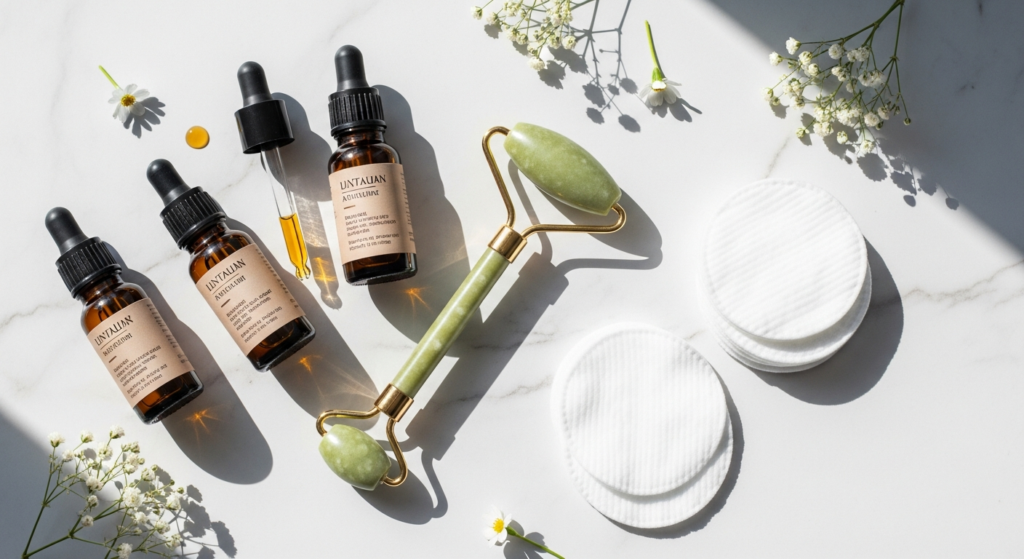
Why it’s essential: After cleansing, your skin is ready to absorb active ingredients that can target specific concerns like hydration, brightness, or redness. Serums are concentrated formulas designed to deliver these powerful ingredients deep into your skin. For beginners, we recommend starting with a focus on hydration or general skin health.
Beginner-friendly serum ingredients:
* Hyaluronic Acid (HA): A hydration hero! HA attracts and holds up to 1,000 times its weight in water, plumping up your skin and making it feel supple and dewy. Great for all skin types, especially dry or dehydrated.
* Niacinamide (Vitamin B3): A multi-tasker that helps minimize pores, improve skin tone, strengthen the skin barrier, and reduce redness. Excellent for oily, combination, and sensitive skin.
* Vitamin C: An antioxidant powerhouse that brightens skin, evens tone, and protects against environmental damage. Great for adding a healthy glow.
How to apply: After cleansing and patting your skin dry, apply 2-3 drops of serum to your face and neck. Gently press or pat it in until absorbed. Give it a minute or two to sink in before the next step.
Tip:* You don’t need multiple serums to start! Choose one that addresses your main concern.
3. Moisturizing: Locking in Goodness
Why it’s essential: Moisturizer is non-negotiable for all skin types, even oily skin! It helps to hydrate your skin, lock in moisture, strengthen your skin barrier, and keep your skin feeling comfortable and looking healthy. Skipping moisturizer can actually make oily skin produce more oil to compensate for dryness.
How to choose a moisturizer:
* For Oily Skin: Look for lightweight, gel-based, or oil-free moisturizers. “Non-comedogenic” (won’t clog pores) is a good label to look for.
* For Dry Skin: Opt for richer creams that contain ingredients like ceramides, shea butter, or squalane to provide intense hydration and barrier support.
* For Combination/Normal Skin: A balanced lotion or cream usually works well. You might prefer a lighter one in the morning and a slightly richer one at night.
* For Sensitive Skin: Choose fragrance-free, hypoallergenic formulas with minimal ingredients.
How to apply: Apply a pea-sized amount evenly to your face and neck after your serum has absorbed. Gently massage it in with upward motions.
4. Protecting: Your Daily Shield (SPF)
Why it’s essential: This is arguably the most critical step in any skincare routine, morning or night (well, just morning for this one!). Sunscreen protects your skin from harmful UV rays, which are the primary cause of premature aging (fine lines, wrinkles, dark spots) and, more importantly, skin cancer. Rain or shine, indoors or outdoors, SPF is your skin’s best defense.
How to choose an SPF:
* Look for a broad-spectrum sunscreen, meaning it protects against both UVA (aging rays) and UVB (burning rays).
* Aim for an SPF of 30 or higher.
* For Oily/Acne-Prone Skin: Gel or fluid formulas, or those labeled “mattifying” or “oil-free.”
* For Dry Skin: Creamier formulas, often with hydrating ingredients.
* For Sensitive Skin: Mineral sunscreens (containing zinc oxide and/or titanium dioxide) are often better tolerated as they sit on top of the skin rather than being absorbed.
How to apply: This is the very last step in your morning routine. Apply a generous amount – about a quarter-sized dollop for your face and neck – and ensure even coverage. Reapply every two hours if you’re outdoors or sweating. Yes, even on cloudy days, and even if you’re mostly indoors near windows!
—
Your Simple Beginner’s Routine:
Morning Routine (The “Wake Up & Protect” Ritual):
1. Cleanse: Gently wash your face with your chosen cleanser. Pat dry.
2. Treat: Apply 2-3 drops of your chosen serum (e.g., Hyaluronic Acid, Vitamin C).
3. Moisturize: Apply your daytime moisturizer.
4. Protect: Finish with a generous layer of broad-spectrum SPF 30+.
Evening Routine (The “Cleanse & Repair” Ritual):
1. Cleanse: Remove makeup/SPF with an oil cleanser or micellar water (if needed), then follow with your regular cleanser. Pat dry.
2. Treat: Apply 2-3 drops of your chosen serum (e.g., Hyaluronic Acid, Niacinamide).
3. Moisturize: Apply your evening moisturizer (can be the same as morning, or a slightly richer one).
That’s it! These core four steps, consistently followed, will make a remarkable difference in your skin’s health and appearance.
Level Up: Gentle Additions & Weekly Rituals
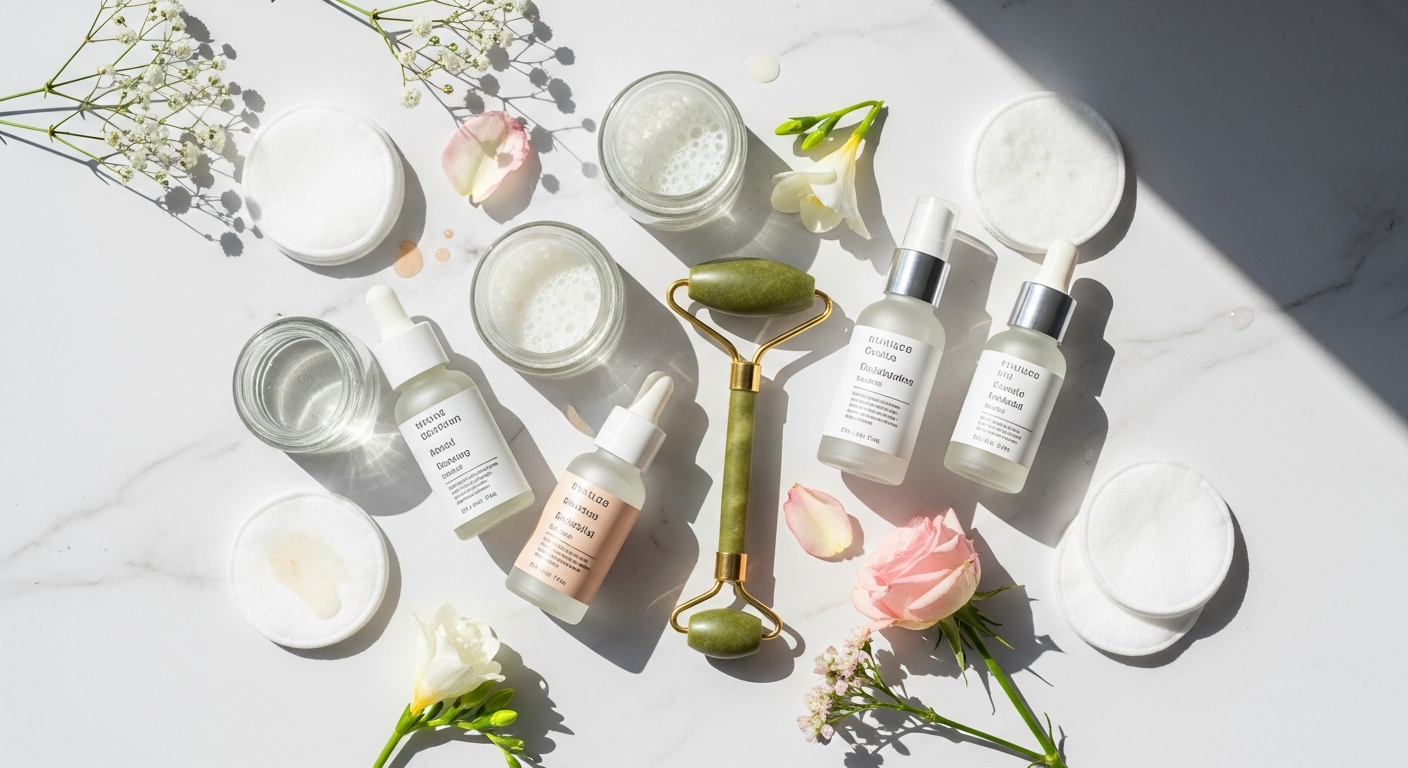
Once you’ve consistently followed your “Core Four” routine for a few weeks (or even a month!) and your skin feels happy and balanced, you might be curious about adding a few extra steps to address specific concerns or simply enhance your self-care ritual. Remember, the key here is gentle additions – introduce one new product at a time and see how your skin reacts.
1. Exfoliation: Unveiling Fresh Skin
Why it’s essential: Exfoliation helps remove dead skin cells that can accumulate on the surface, leading to dullness, clogged pores, and rough texture. By gently buffing them away, you reveal brighter, smoother skin and allow your other products to absorb better.
Types for beginners:
* Chemical Exfoliants (Recommended for beginners): Don’t let the name scare you! These use acids like AHAs (Alpha Hydroxy Acids, e.g., lactic or glycolic acid) or BHAs (Beta Hydroxy Acids, e.g., salicylic acid) to dissolve the “glue” holding dead skin cells together. They are generally much gentler than harsh physical scrubs. Start with a low concentration (e.g., 5% lactic acid) once or twice a week.
AHAs* are great for surface exfoliation, brightening, and improving texture, especially for dry or normal skin.
BHAs* are oil-soluble, so they can penetrate pores to decongest them, making them ideal for oily or acne-prone skin.
Physical Exfoliants (Use with caution): These are scrubs with small particles. While satisfying, many can be too abrasive and create micro-tears in the skin. If you choose a physical exfoliant, opt for one with very fine, uniform particles (like jojoba beads) and use a very* light hand.
How to incorporate: Start with once a week, ideally in your evening routine after cleansing. Apply the exfoliant, leave it on for the recommended time (if it’s a rinse-off mask) or let it absorb (if it’s a leave-on liquid/serum), and then follow with your serum and moisturizer. Gradually increase to twice a week if your skin tolerates it well. Always follow up with SPF the next morning, as exfoliation can make your skin more sensitive to the sun.
2. Masks: Targeted Treatments & Relaxation
Why it’s essential: Face masks are like a mini spa treatment for your skin! They can deliver a concentrated boost of ingredients to address specific concerns, whether you need extra hydration, soothing, or clarifying.
Types to consider:
* Hydrating Masks: Often cream or gel-based, packed with ingredients like hyaluronic acid or ceramides. Perfect for dry, dull, or dehydrated skin.
* Clay Masks: Help absorb excess oil and draw out impurities, making them great for oily or congested skin. Look for gentle clay masks that don’t dry rock-hard.
* Sheet Masks: Convenient and packed with serum, offering a quick boost of hydration and beneficial ingredients.
3. Eye Cream: A Little Extra TLC
Why it’s essential: The skin around your eyes is much thinner and more delicate than the rest of your face, making it more prone to dryness, fine lines, and puffiness. While your regular moisturizer can often be used around the eyes, a dedicated eye cream can offer targeted benefits.
When to introduce: You can start using an eye cream in your late 20s or whenever you notice concerns like dryness or fine lines around your eyes.
How to apply: After your serum and before your moisturizer, gently pat a tiny amount (about the size of a grain of rice for both eyes) with your ring finger around the orbital bone (the bone surrounding your eye), not too close to your lash line.
Remember, these are “level-up” steps. Don’t feel pressured to add them all at once! Listen to your skin, introduce one at a time, and only keep what truly feels beneficial for you.
Beyond the Bottles: Lifestyle Habits for Radiant Skin
While the products you use play a significant role in skin health, true radiance extends far beyond what you apply topically. Your skin is a reflection of your overall health and lifestyle. Integrating these holistic habits into your daily life can amplify the benefits of your skincare routine and contribute to a healthy glow from the inside out.
1. Hydration, Hydration, Hydration: We hear it all the time, but it’s true: drinking enough water is crucial for healthy skin. Water helps maintain your skin’s elasticity, plumpness, and overall function. Dehydrated skin can look dull, emphasize fine lines, and even lead to increased oil production as your skin tries to compensate. Aim for at least 8 glasses of water a day, more if you’re active or in a hot climate. Keep a water bottle handy and sip throughout the day!
2. Nourish from Within: What you eat directly impacts your skin. A diet rich in whole foods, fruits, vegetables, and healthy fats provides your skin with essential vitamins, minerals, and antioxidants.
* Antioxidants (berries, leafy greens, colorful veggies): Help protect your skin from environmental damage.
* Omega-3 Fatty Acids (fatty fish, flax seeds, walnuts): Support skin barrier function and reduce inflammation.
* Vitamin C (citrus fruits, bell peppers): Crucial for collagen production and brightening.
* Avoid excessive sugar and highly processed foods: These can contribute to inflammation and breakouts for some individuals.
3. Prioritize Sleep: They don’t call it “beauty sleep” for nothing! While you sleep, your skin goes into repair mode, regenerating cells and boosting blood flow. Chronic lack of sleep can lead to dullness, dark circles, and a compromised skin barrier. Aim for 7-9 hours of quality sleep each night. Create a relaxing bedtime routine to help you wind down.
4. Manage Stress: Stress isn’t just a mental burden; it can manifest physically, especially on your skin. Stress can trigger breakouts, worsen conditions like eczema or psoriasis, and contribute to dullness. Find healthy ways to manage stress, whether it’s meditation, yoga, spending time in nature, journaling, or simply taking a few deep breaths. Your skin (and mind!) will thank you.
5. Keep Things Clean: Little things can make a big difference!
* Change your pillowcase regularly: Dirt, oil, and bacteria from your hair and face can accumulate, potentially leading to breakouts. Aim for at least once a week.
* Clean your phone screen: Your phone touches your face frequently, transferring bacteria. Wipe it down daily with an antibacterial wipe.
* Clean your makeup brushes: Dirty brushes harbor bacteria and old product, which can irritate your skin and cause breakouts. Wash them weekly with a gentle cleanser.
* Avoid touching your face: Resist the urge to pick, pop, or unnecessarily touch your face throughout the day, as this can transfer bacteria and dirt.
By embracing these holistic habits alongside your skincare routine, you’ll be giving your skin the best possible foundation for health and radiance. It’s a testament to the idea that true self-care encompasses every aspect of your well-being.
Building Your Routine: Patience, Consistency & Listening to Your Skin
Embarking on a new skincare journey is exciting, but it’s crucial to approach it with a few key principles in mind. This isn’t a race, and instant gratification isn’t the goal. Think of it as a marathon for lasting skin health.
1. Patience is a Virtue: Skincare is not a magic wand. It takes time for your skin to adapt to new products and for those products to show their full effects. Typically, it takes at least 4-6 weeks to see noticeable improvements with new ingredients, sometimes even longer for issues like hyperpigmentation. Don’t get discouraged if you don’t see results overnight. Stick with your routine consistently before deciding if something isn’t working.
2. Consistency is King (or Queen!): This is perhaps the most important tip of all. A simple routine followed diligently every single day and night will yield far better results than an elaborate, expensive one that you only do sporadically. Make your routine a non-negotiable part of your morning and evening rituals. Set reminders, keep your products visible, or even make it a mindful moment you look forward to.
3. Listen to Your Skin: Your skin is constantly communicating with you. Pay attention to how it feels and looks after using a new product or following your routine.
* Patch Test New Products: Before applying a new product all over your face, apply a small amount to an inconspicuous area (like behind your ear or on your inner forearm) for a few days. This helps you check for any irritation or allergic reactions.
* Watch for Redness, Itching, or Burning: These are signs of irritation. If a product causes discomfort, stop using it. Your skin should never feel painful or excessively tight.
* Adjust Seasonally: Your skin’s needs can change with the seasons. You might need a richer moisturizer in winter and a lighter one in summer.
* Less is Often More: Especially when starting out, resist the urge to pile on too many active ingredients. Simplicity allows you to identify what works and what doesn’t without overwhelming your skin.
4. One Product at a Time: When introducing a new product (beyond your core four), add only one new item every 2-4 weeks. This way, if you experience a reaction or breakout, you can easily identify the culprit.
5. Don’t Chase Every Trend: The beauty industry is constantly evolving, with new ingredients and trends popping up daily. While it’s fun to explore, for a beginner, it’s best to stick to your foundational routine and proven ingredients. Focus on what works for your skin, not just what’s popular.
Building a skincare routine is a personal journey of discovery. There might be some trial and error, but with patience, consistency, and a willingness to listen to your skin, you’ll find what works best for you. Embrace the process, enjoy the moments of self-care, and celebrate the healthy, radiant skin you’re cultivating.