
The Ultimate Self-Improvement Guide for Busy Professionals: Mastering Wellness and Productivity in 2026
In the high-stakes corporate landscape of 2026, the traditional concept of “hustle culture” has undergone a necessary transformation. We have moved past the era of burnout-as-a-badge-of-honor and entered an age where “optimized sustainability” is the ultimate competitive advantage. For the modern professional, self-improvement is no longer a luxury or a weekend hobby; it is a strategic requirement. However, the primary challenge remains: how do you integrate meaningful growth into a schedule that is already bursting at the seams?
The secret lies in moving away from radical overhauls and embracing the science of micro-habits and intentional systems. This guide is designed for the executive, the entrepreneur, and the high-performer who values their time as much as their health. We will explore how to harmonize professional ambition with personal well-being, ensuring that your climb to the top doesn’t come at the cost of your mental or physical vitality.
—
1. The Architecture of Micro-Habits: Small Wins for Massive ROI
For a busy professional, the biggest barrier to self-improvement is the “all-or-nothing” fallacy. We often believe that if we can’t spend ninety minutes at the gym or two hours reading, it isn’t worth doing at all. In 2026, the most successful individuals are those who have mastered “habit stacking” and micro-actions.
**The Power of Habit Stacking**
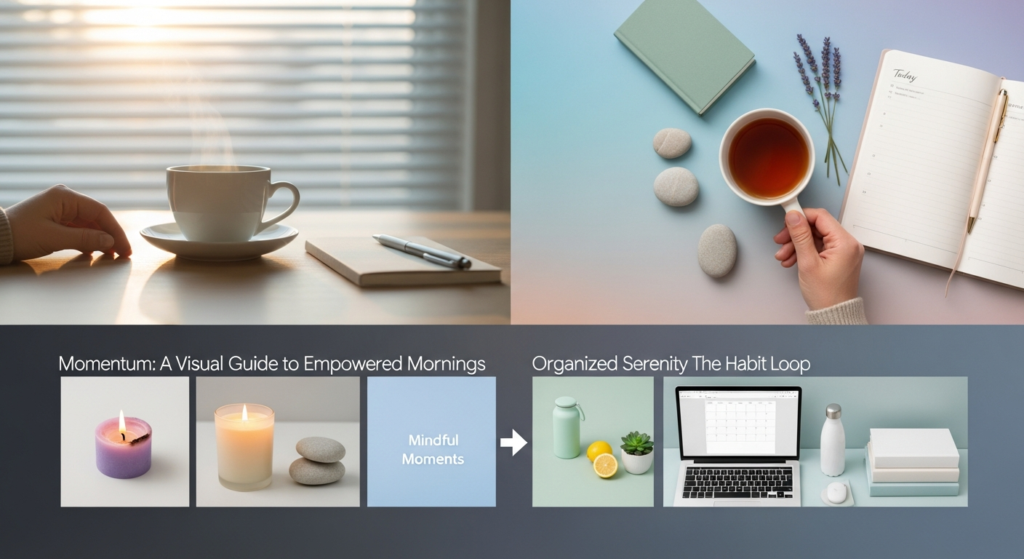
Habit stacking, a concept popularized by James Clear and refined for the modern era, involves anchoring a new, desired habit to an existing one. For example, if you want to practice mindfulness but have no time, stack a two-minute breathing exercise onto your morning coffee brewing. The existing habit (coffee) acts as the trigger for the new one (mindfulness).
**The Two-Minute Rule**
When starting a new routine, it should take less than two minutes to do. Want to start a reading habit? Read one page before bed. Want to exercise? Put on your workout clothes and do ten jumping jacks. The goal is to master the “art of showing up.” Once the habit is solidified in your identity, you can scale it. For the busy professional, these small wins build the psychological momentum needed to sustain long-term change without adding to “decision fatigue.”
**Digital Habit Tracking**
In 2026, we have access to sophisticated AI-integrated wearables that track not just steps, but cortisol levels and cognitive load. Use these tools to gamify your progress. Seeing a visual representation of a 30-day streak of drinking 2 liters of water can be a powerful motivator for someone driven by data and results.
—
2. Cognitive Optimization: Beyond the To-Do List
Productivity in 2026 isn’t about doing more things; it’s about doing the *right* things with maximum focus. The modern professional must combat “fragmented attention,” a byproduct of our hyper-connected world.
**Mastering Deep Work**
Cal Newport’s concept of “Deep Work” is more relevant now than ever. To improve professionally, you must carve out non-negotiable blocks of time—ideally 90 minutes—where notifications are silenced and you focus on a single, high-value task. This is where “flow states” occur, and it is where your best work is produced.
**The Rule of 3**
Instead of a daunting list of thirty tasks, adopt the “Rule of 3.” Every morning (or the night before), identify the three outcomes that will make the biggest impact on your day. If you achieve those three, the day is a success. This prevents the feeling of being overwhelmed and ensures that your energy is directed toward high-leverage activities rather than “busy work.”
**Harnessing Ultradian Rhythms**
Our brains can only maintain high-level focus for about 90 to 120 minutes before needing a break. This is known as the ultradian rhythm. Instead of powering through with caffeine, successful professionals in 2026 take 15-minute “recovery breaks.” This could be a short walk, a stretch, or staring out a window—anything that moves the brain from “task-positive” to “default mode,” allowing for subconscious problem-solving.
—
3. Physical Wellness: High-Performance Fueling and Movement
You cannot sustain a high-performance career on a low-performance body. For the busy professional, wellness must be integrated into the workday rather than treated as an afterthought.
**Nutritional Timing and Brain Food**
In 2026, we understand that *when* we eat is often as important as *what* we eat. Many professionals utilize “intermittent energy windows” to keep cognitive clarity high during peak work hours. Focus on neuro-protective foods: Omega-3 fatty acids, antioxidants, and complex carbohydrates that prevent blood sugar spikes. Avoid the “afternoon slump” by choosing high-protein lunches that sustain focus rather than heavy, carb-laden meals that induce lethargy.
**The “Movement Snack” Philosophy**
If you can’t get to the gym for an hour, embrace “movement snacks.” Research shows that three 10-minute bursts of vigorous activity can be as effective for cardiovascular health as one 30-minute session. Take a walking meeting, use a standing desk, or perform a quick bodyweight circuit between calls. This keeps the lymphatic system moving and prevents the metabolic slowdown associated with prolonged sitting.
**Sleep as a Performance Metric**
Sleep is the ultimate self-improvement tool. In 2026, high-performers treat sleep like an appointment that cannot be cancelled. Use “sleep hygiene” techniques: cool room temperatures, total darkness, and a digital sunset (no screens 60 minutes before bed). Quality sleep optimizes memory consolidation and emotional regulation, making you a more effective leader and decision-maker.
—
4. Emotional Intelligence and Mental Resilience
The “hard skills” of the past are being augmented by AI, leaving “soft skills”—like empathy, resilience, and emotional intelligence (EQ)—as the primary differentiators for successful professionals in 2026.
**The Practice of Reframing**
Stress is inevitable in a high-pressure career, but how you perceive it changes its physiological impact. Practice “cognitive reframing.” Instead of viewing a high-stakes presentation as a threat, view it as a challenge or an opportunity to demonstrate expertise. This shifts the body from a “distress” state to an “eustress” (positive stress) state.
**Setting Digital Boundaries**
The “always-on” culture is a recipe for burnout. Establishing clear boundaries is a sign of professional maturity, not weakness. This might mean “no emails after 8 PM” or “no Slack on weekends.” By creating a clear “off” switch, you allow your nervous system to recover, ensuring that when you are “on,” you are performing at 100% capacity.
**Curated Inputs**
Self-improvement is heavily influenced by the information we consume. Busy professionals must be ruthless about their “information diet.” Unsubscribe from cluttering newsletters, limit social media doom-scrolling, and replace them with high-quality podcasts or audiobooks during commutes. In 2026, being “well-informed” is about depth, not just breadth.
—
5. Strategic Reflection: The Executive Review
You cannot improve what you do not measure. A critical component of self-improvement for the professional is the “Weekly Review.”
**The Sunday Reset**
Dedicate 30 minutes every Sunday to look back at the previous week and plan for the next. Ask yourself:
* What were my biggest wins?
* Where did I lose time?
* Did I stick to my wellness habits?
* What is the #1 goal for the coming week?
**The Monthly Audit**
Once a month, take a higher-level view. Are your daily habits actually moving the needle toward your long-term vision? Self-improvement is an iterative process. If a certain routine (like a 5 AM wake-up call) is making you more exhausted than productive, have the courage to pivot. The goal is effectiveness, not adherence to a “perfect” routine someone else designed.
**The Role of Mentorship and Coaching**
Even the best athletes have coaches. In 2026, many professionals use executive coaches or “peer mastermind groups” to provide external perspective. Having someone to hold you accountable to your personal growth goals is often the difference between a temporary phase and a permanent lifestyle change.
—
6. Integrating Technology: Using AI as a Wellness Partner
As we move through 2026, technology has shifted from being a source of distraction to a powerful ally in self-improvement.
**AI-Powered Personal Assistants**
Modern AI tools can now manage your calendar with “wellness-first” logic. These systems can automatically block out time for exercise based on your meeting load or suggest “focus blocks” when your historical data shows you are most productive. Utilizing these tools removes the “mental load” of planning, allowing you to simply execute.
**Biofeedback and Real-Time Adjustments**
Newer wearables provide real-time biofeedback. If your heart rate variability (HRV) is low, indicating high stress or poor recovery, your device might suggest a shorter workout or a guided meditation. Learning to listen to these data points allows you to train and work *with* your body’s natural state rather than against it.
**Virtual Reality (VR) for Mental Escapism**
For the professional who can’t take a week-long vacation, VR “micro-breaks” offer a way to reset. Spending five minutes in a high-fidelity virtual nature environment can significantly lower cortisol levels and provide a mental “reset” that a simple coffee break cannot match.
—
FAQ: Frequently Asked Questions
**Q1: How much time do I actually need for a daily self-improvement routine?**
A: You can see significant results in as little as 15 to 20 minutes a day if you are consistent. The key is not the duration, but the quality and consistency. Five minutes of focused meditation and 15 minutes of movement are far better than a two-hour session once a week.
**Q2: I work 60+ hours a week; isn’t “wellness” just another thing on my to-do list?**
A: Wellness should be viewed as the *engine* that allows you to work those hours efficiently. Without it, your 60 hours are likely only 30 hours of actual productivity and 30 hours of “grinding” through fatigue. Wellness is an investment that yields a higher hourly output.
**Q3: What are the best apps for busy professionals in 2026?**
A: Focus on apps that reduce friction. AI-driven calendar tools (like Motion or Reclaim), habit trackers with clean UIs (like HabitShare or Streaks), and high-quality meditation apps (like Waking Up or Insight Timer) are current industry standards for high-performers.
**Q4: How do I handle “burnout” if I’m already in the middle of it?**
A: Burnout requires an immediate “radical reduction.” Strip your schedule down to the absolute essentials. Prioritize sleep and hydration above all else. In 2026, the best approach is “preventative maintenance,” but if you’re already burnt out, professional help and a temporary leave of absence are often the most productive moves you can make.
**Q5: Should I focus on physical or mental habits first?**
A: They are intrinsically linked, but physical habits (sleep, hydration, movement) often provide the quickest “win” and the energy needed to tackle more complex mental habits (emotional regulation, deep work). Start with your physiology to build the foundation for your psychology.
—
Conclusion: The Path Forward in 2026
Self-improvement for the busy professional in 2026 is an exercise in intentionality. It is the recognition that your most valuable asset is not your bank account or your job title, but your personal energy and cognitive clarity. By implementing micro-habits, respecting your biological rhythms, and utilizing the technological tools at your disposal, you can achieve a level of high-performance that is both successful and sustainable.
Remember, the goal of a wellness routine isn’t to add more pressure to your life; it’s to create the space and strength required to handle the pressure you already have. Start small, stay consistent, and view your personal growth as the ultimate professional development project. Progress, not perfection, is the key to thriving in the modern world.