
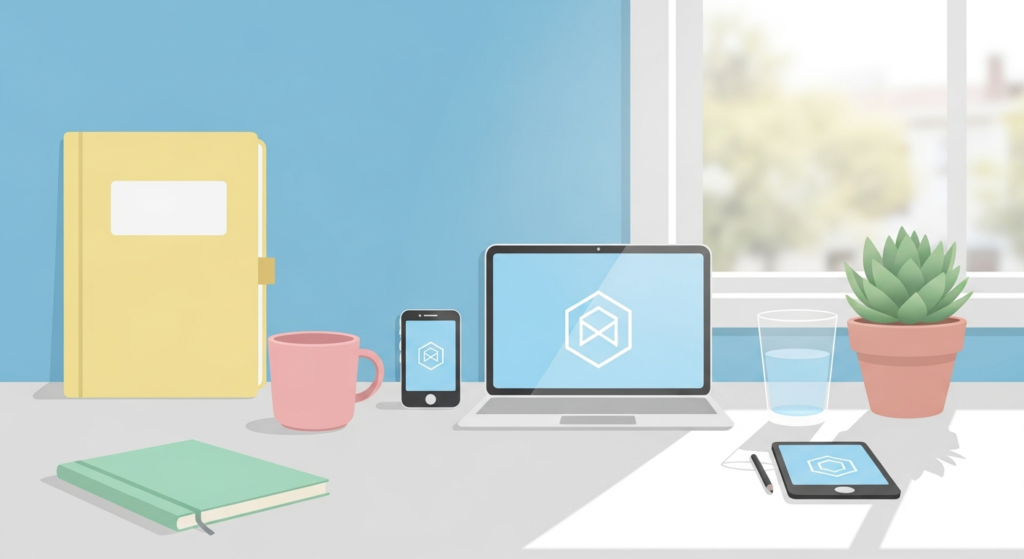
The Best Productivity Tools for 2026: Elevate Your Habits and Well-being
As we move into 2026, the definition of productivity has undergone a radical transformation. Gone are the days when being “productive” simply meant churning out as many tasks as possible in a twelve-hour window. Today, the most effective individuals aren’t those who work the hardest, but those who manage their energy, focus, and wellness with the most intention. We have officially entered the era of **Bio-Productivity**—a holistic approach where our digital tools don’t just track what we do, but how we feel while doing it.
For those building better daily habits and wellness routines, the software landscape of 2026 offers something far more sophisticated than a simple to-do list. We are seeing a convergence of behavioral science, biometric data, and ambient artificial intelligence. These tools are designed to protect our mental health rather than exploit our dopamine loops. Whether you are a remote professional, a creative, or someone simply looking to reclaim your time, the following guide highlights the best productivity tools for 2026 to help you achieve a state of high-performance harmony.
1. Predictive AI Habit Assistants: Beyond the Static Checklist
In previous years, habit trackers were passive. You performed an action, and you checked a box. In 2026, the best tools are predictive and proactive. AI-driven habit assistants now function as “behavioral co-pilots,” using machine learning to understand your unique patterns and friction points.
Tools like **HabitFlow AI** and **MindfulPath** represent this new wave. Instead of just reminding you to “Meditate at 8:00 AM,” these tools analyze your calendar and stress levels. If they notice you have a high-stakes meeting at 9:00 AM, the assistant might suggest a shorter, three-minute breathing exercise at 8:45 AM instead. These tools utilize “implementation intentions,” a psychological concept where the tool helps you plan for obstacles before they happen.
The beauty of 2026 technology is its ability to reduce “decision fatigue.” By the time you wake up, your habit assistant has already mapped out the path of least resistance for your wellness goals, ensuring that your healthy habits aren’t just another chore on your list, but a natural part of your day’s flow.
2. Biometric-Linked Task Management: Syncing Work with Your Nervous System
One of the most significant breakthroughs for 2026 is the seamless integration between wearable health tech and productivity software. For years, we tracked our sleep and steps in one app and our project deadlines in another. Now, the two have merged to create “Nervous System-Aware” productivity.
Platforms like **BioSync** and updated versions of **Oura-Teams** allow your task manager to communicate with your wearable device. If your Heart Rate Variability (HRV) is low—indicating that your body is under physical or emotional stress—the software will automatically suggest “Low Energy Tasks” from your list, such as administrative filing or light research. Conversely, when your readiness score is high, the tool highlights your “Deep Work” priorities.
This shift prevents burnout by acknowledging that human capacity fluctuates. In 2026, pushing through a “red zone” of exhaustion is seen as a failure of planning. By using tools that sync with your biology, you can optimize your output without sacrificing your long-term health, making this the gold standard for habit-builders and wellness enthusiasts alike.
3. Focus Environments and Digital Sanctuary Tools
The battle for our attention has never been more intense, but the tools to fight back have become incredibly sophisticated. In 2026, we have moved past simple website blockers toward “Digital Sanctuaries.” These are tools that don’t just lock you out of apps; they reshape your entire operating system to support a flow state.
**Opal 2.0** and **FocusSpace** are leading the charge here. These tools use AI to detect when you are attempting to enter a “Deep Work” session and automatically toggle your devices into a minimalist UI. They can filter out non-essential notifications, change your screen to grayscale to reduce dopamine spikes, and even play bio-acoustic soundscapes tailored to your brainwave patterns.
Furthermore, these tools now incorporate “Focus Budgeting.” Much like a financial budget, you are given a set amount of “Distraction Minutes” per day. Once they are used, the tool gently nudges you toward a movement break or a hydration pause. This promotes the habit of conscious consumption, teaching users to treat their attention as a finite, precious resource.
4. Neuro-inclusive Productivity: Tools for Diverse Brains
2026 marks a turning point in how we design software for neurodiversity. We have finally moved away from the “one size fits all” approach to organization. For individuals with ADHD, dyslexia, or autism, traditional productivity tools often felt like an uphill battle. The new generation of tools is built with “Cognitive Accessibility” at its core.
Tools like **Tiimo** and **Goblin.tools** have evolved into comprehensive ecosystems that help break down complex projects into “micro-steps” automatically. For those who struggle with “time blindness,” visual timers and haptic feedback devices (like the **FocusPuck**) provide a physical sensation of time passing, helping users stay grounded in the present moment.
Moreover, these tools prioritize “body doubling” features—the practice of working alongside someone else to increase focus. Virtual co-working spaces integrated directly into these apps allow users to join a quiet, moderated session with others around the world. This social accountability is a powerful habit-builder for those who find solo work isolating or overwhelming.
5. Social Accountability and Community Habit Hubs
Speaking of social accountability, 2026 has seen a move away from anonymous social media and toward “Intimate Accountability Circles.” Research shows that we are 65% more likely to complete a goal if we commit to someone else. The latest productivity tools leverage this “social glue” to help users stick to their wellness routines.
Apps like **Focusmate** and **HabitCircle** allow users to join small, curated groups of 4-6 people with similar goals—such as “Morning Yoga” or “Writing a Manuscript.” Unlike large, noisy forums, these circles are focused on daily check-ins and shared progress.
The integration of “gamified wellness” has also matured. Instead of competing for the most hours worked, communities now compete for “Wellness Streaks” or “Recovery Scores.” This shifts the social incentive from “hustle culture” to “health culture.” For people building better daily habits, these community hubs provide the encouragement and structure needed to turn a temporary change into a permanent lifestyle.
6. The Resurgence of Tactile Tech: Smart Analog Systems
Perhaps the most surprising trend of 2026 is the return to the physical. After years of digital saturation, many are experiencing “screen fatigue.” This has led to the rise of **Smart Analog Tools**—devices that feel physical but possess digital intelligence.
The **reMarkable 3** and the **Neo-Ink Smartpen** are perfect examples. These tools allow you to handwrite your daily intentions, journals, and habit trackers, which provides a tactile, meditative experience that typing cannot replicate. However, the “smart” element ensures that your handwritten notes are instantly digitized, searchable, and synced with your cloud-based calendars.
For wellness-seekers, the act of physically crossing a habit off a list or journaling by hand has profound psychological benefits. It slows down the nervous system and encourages reflection. By using hybrid tools, you get the cognitive benefits of analog work with the efficiency of the digital age, creating a balanced workflow that supports mental clarity.
FAQ: Productivity and Wellness in 2026
#
1. Why is wellness becoming a core part of productivity tools?\nIn the past, productivity and wellness were seen as separate, often conflicting goals. However, 2026 research has proven that sustained high performance is impossible without mental and physical health. Modern tools recognize that a rested, hydrated, and emotionally regulated person is naturally more creative and efficient. Wellness isn’t a “break” from work; it is the foundation of it.
#
2. Are these AI-driven tools safe for my privacy?\nPrivacy is a major concern in 2026. Most top-tier productivity tools now use “Local-First” AI, meaning your biometric data and personal habits are processed on your device rather than in the cloud. Look for tools that offer end-to-end encryption and have a “Zero-Knowledge” policy regarding your health data.
#
3. Can I still use free tools to stay productive in 2026?\nAbsolutely. While premium AI assistants offer more automation, the core principles of productivity remain accessible. Free tools like **Notion** (with community templates) and **Google Calendar** still offer robust habit-stacking capabilities. The “best” tool is always the one you actually use consistently.
#
4. How do I choose between an analog and a digital system?\nIt depends on your “Cognitive Load.” If you spend all day on a computer, an analog system (like a paper planner or smart notebook) can provide a much-needed mental break. If you are constantly on the move, a digital-first mobile app might be more practical. Many people in 2026 find success with a “Hybrid Model”: digital for scheduling and analog for deep thinking.
#
5. What is “Bio-Productivity,” and do I need it?\nBio-Productivity is simply the practice of aligning your work schedule with your biological rhythms (like your circadian rhythm and energy levels). You don’t “need” expensive gear for this, but tools that track your sleep and stress can make the process much easier by providing the data you need to make informed decisions about your day.
Conclusion: Designing a Productive Life You Love
As we navigate through 2026, it is clear that the best productivity tools aren’t just about “doing more.” They are about doing what matters most, while staying healthy and happy. The tools listed above represent a shift toward a more human-centric way of living—one where technology serves our well-being rather than dictating our worth through a series of notifications and deadlines.
Whether you choose to embrace high-tech biometric syncing or the quiet simplicity of a smart analog notebook, the goal remains the same: to build a routine that supports your best self. By selecting tools that align with your specific habits and wellness goals, you are doing more than just managing your time; you are designing a life of purpose, focus, and vitality. In 2026, that is the ultimate definition of being productive.
For designers and creatives looking to build scalable workflows, this step-by-step guide to building a design system in 2026 covers everything from UI components to Figma documentation and team adoption.