
Master Your Routine: The Ultimate Guide to Habit Stacking for Daily Success
Have you ever wondered why some people seem to move through their day with an effortless sense of discipline, while others struggle just to remember to drink enough water? The difference isn’t usually a matter of willpower or innate talent; it is a matter of architecture. Success is not a destination but a series of small, automated actions woven into the fabric of your life. This is the core philosophy of “habit stacking.”
By the time we reach 2026, the world will likely be faster and more demanding than ever. To thrive in this environment, you need a system that minimizes decision fatigue and maximizes productivity without burning you out. Habit stacking—a concept popularized by behavioral experts like BJ Fogg and James Clear—is the most effective way to build a wellness routine that actually sticks. Instead of trying to manifest a brand-new life out of thin air, you learn to “hitchhike” new behaviors onto the things you are already doing. In this guide, we will explore how to master habit stacking to transform your daily success from a fleeting goal into an automated reality.
1. The Science of Habit Stacking: Why It Works
To understand habit stacking, we must first look at the biology of the human brain. Our brains are incredibly efficient machines designed to conserve energy. One of the ways they do this is through a process called “synaptic pruning.” As we grow and develop, the brain strengthens the neural pathways we use most often and prunes away the ones we don’t.
When you perform an action every day—like brewing your morning coffee or brushing your teeth—the neural pathway for that action becomes a “superhighway” in your brain. Habit stacking works by identifying an existing, high-traffic neural pathway (your current habit) and “stacking” a new behavior on top of it.
In behavioral psychology, this is known as an “implementation intention.” Instead of a vague goal like “I want to meditate more,” you create a specific plan: “After I pour my morning cup of coffee, I will meditate for one minute.” By linking the new habit to an established anchor, you eliminate the need for motivation. The coffee becomes the “trigger” or the “cue” that tells your brain it’s time for the next step. You aren’t relying on your memory or your willpower; you are relying on the momentum of your existing life.
2. Identifying Your Anchors: The Foundation of a Strong Stack
The most critical step in habit stacking is choosing the right “anchor” habit. An anchor is a behavior you already perform with 100% consistency. If your anchor is weak, your stack will collapse. For example, if you say, “After I go to the gym, I will read five pages,” but you only go to the gym twice a week, your reading habit will never become automated.
To build a successful routine for 2026, start by auditing your current day. Make a list of everything you do without thinking:
* Waking up
* Turning off your alarm
* Making the bed
* Brushing your teeth
* Starting the shower
* Pouring coffee/tea
* Checking your email
* Walking through the front door after work
* Placing your phone on the charger at night
These are your anchors. The best anchors are specific and immediate. “After I eat lunch” is okay, but “After I close my laptop for my lunch break” is better because it provides a precise moment in time. When you are specific, you remove the “wiggle room” that leads to procrastination. As you look toward your 2026 goals, identify which of these anchors provide the most natural transition to the wellness habits you want to cultivate.
3. Creating Your 2026 Wellness Stack: A Step-by-Step Blueprint
As we move into a new era of personal development, the focus is shifting toward holistic wellness. We no longer just want to be “productive”; we want to be balanced, hydrated, and mentally clear. Here is how you can build a comprehensive morning stack designed for daily success.
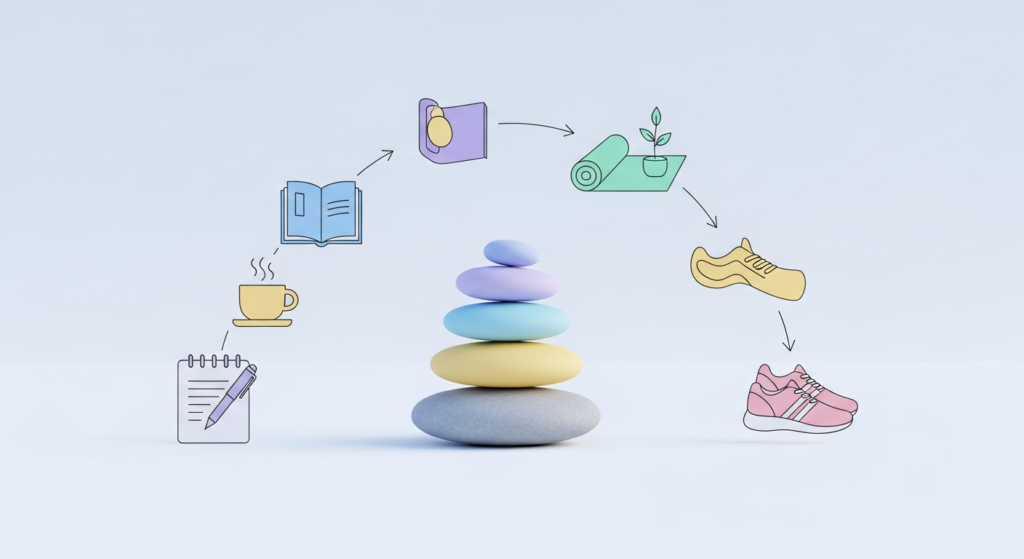
**The Formula: After [Current Habit], I will [New Habit].**
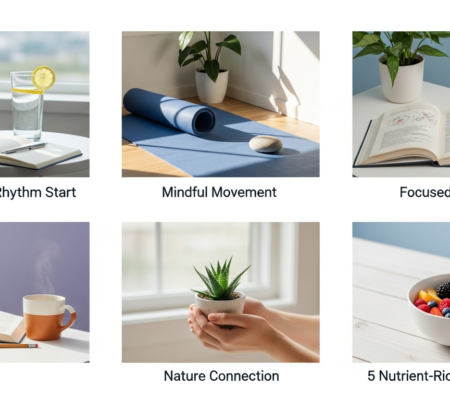
* **Step 1: The Micro-Start.** After I turn off my alarm, I will sit up and drink one full glass of water. (Hydration)
* **Step 2: The Physical Trigger.** After I drink my water, I will do two minutes of light stretching. (Mobility)
* **Step 3: The Mental Reset.** After I finish stretching, I will write down three things I am grateful for in a journal. (Mindset)
* **Step 4: The Preparation.** After I finish my gratitude journal, I will review my top three priorities for the day. (Focus)
Notice that none of these tasks take more than a few minutes. The secret to habit stacking is starting small—so small that it is impossible to say no. In the beginning, the goal isn’t the quality of the stretching or the depth of the gratitude; the goal is the *connection* between the habits. Once the sequence is locked in, you can expand the duration. By 2026, this stack will be so ingrained in your identity that you’ll feel “off” if you don’t do it.
4. Avoiding “Stack Overload”: Common Pitfalls to Sidestep
One of the biggest mistakes people make when discovering habit stacking is trying to build a 15-step routine overnight. This leads to “stack overload,” where the routine becomes a source of stress rather than a tool for success.
To ensure your success, keep these rules in mind:
* **The Rule of One:** Add only one new habit to an existing stack at a time. Let that one habit become automatic (usually taking 3–4 weeks) before adding another layer.
* **The Two-Minute Rule:** If a new habit takes more than two minutes, simplify it. Don’t start with “After I get home, I will work out for an hour.” Start with “After I get home, I will put on my running shoes.”
* **Context Matters:** Make sure the new habit fits the environment of the anchor. If your anchor is “getting into bed,” don’t try to stack “doing 20 jumping jacks.” Your body is preparing for sleep, not high-intensity cardio. Match the energy of the anchor to the energy of the new habit.
If you find yourself skipping your stack, it usually means the “link” is too weak or the new habit is too demanding. Scale back until the friction disappears.
5. Habit Stacking for Different Pillars of Success
Habit stacking isn’t just for morning routines; it can be applied to every area of your life. To achieve total daily success in 2026, consider these specialized stacks:
**For Professional Productivity:**
* **Anchor:** After I sit down at my desk, **Stack:** I will put my phone in a drawer.
* **Anchor:** After I finish my last meeting of the day, **Stack:** I will clear my desktop of all random files.
**For Physical Health:**
* **Anchor:** After I use the restroom, **Stack:** I will do five air squats.
* **Anchor:** After I put on my pajamas, **Stack:** I will floss one tooth (it sounds silly, but it works to build the ritual).
**For Mental Clarity:**
* **Anchor:** After I close my laptop for the day, **Stack:** I will take five deep, belly breaths to transition from “work mode” to “home mode.”
* **Anchor:** After I start the dishwasher at night, **Stack:** I will set out my clothes for the next morning.
By spreading these mini-stacks throughout your day, you create a system of “guardrails” that keep you on track without requiring constant mental effort.
6. The Long Game: Moving from Action to Identity
The ultimate goal of habit stacking is to shift your identity. In the beginning, you are “a person who is trying to meditate after coffee.” Eventually, you become “a meditator.”
When your habits are stacked, they cease to be tasks on a to-do list and become part of who you are. This is the “compounding effect” of behavioral change. Just as a small investment compounds over time to create wealth, small habits stacked together compound to create a completely different life.
By the time 2026 concludes, your ability to stick to a routine will be your greatest competitive advantage. In a world full of distractions, the person who can automate their wellness and productivity is the person who wins. Habit stacking is the bridge between the person you are today and the person you want to become.
—
Frequently Asked Questions (FAQ)
#
1. What is the difference between habit stacking and a regular routine?
A regular routine is a list of things you do. Habit stacking is a specific method of *linking* those things together using a “Cue → Action” formula. While a routine can be forgotten or ignored, habit stacking uses the momentum of established behaviors to trigger new ones, making it much more likely to stick.
#
2. How many habits can I stack at once?
When you are first starting, it is best to add only **one** new habit to an existing anchor. Once that connection is solidified (usually after 21 to 66 days), you can add another. Trying to stack five new habits onto one anchor simultaneously is a recipe for failure.
#
3. What should I do if I miss a day in my habit stack?
The “Never Miss Twice” rule is essential here. Missing one day has almost no impact on your long-term progress, provided you get back on track the next day. If you miss a day, don’t judge yourself; instead, look at the stack. Was the anchor too vague? Was the new habit too difficult? Adjust the architecture and start again.
#
4. Can habit stacking help with breaking bad habits?
Yes, though it works slightly differently. You can use a “replacement stack.” Instead of just trying to stop a bad habit, you stack a positive one on the trigger. For example: “After I feel the urge to check social media while working, I will take one sip of water and do one deep breath.” You are using the old trigger to launch a new, healthier behavior.
#
5. Does the order of the stack matter?
Absolutely. You should order your stack based on logical flow and energy levels. It makes more sense to “stack” your most difficult or important habit (like deep work or exercise) earlier in the day when your willpower is highest, and “stack” relaxing habits (like reading or skin care) in the evening.
—
Conclusion: Designing Your Future, One Stack at a Time
As we look toward 2026 and beyond, the complexity of daily life is only going to increase. We cannot rely on sheer force of will to navigate our health, careers, and personal lives. Success in the modern world requires a system—a way to make the “right” choice the “easy” choice.
Habit stacking is that system. It respects the way your brain is wired and utilizes the power of existing neural pathways to foster growth. By identifying your anchors, starting with micro-habits, and avoiding the trap of over-complication, you can build a daily routine that serves you for years to come.
Remember, you do not rise to the level of your goals; you fall to the level of your systems. Start today by picking one anchor and one small wellness habit. Link them together, and watch as the small ripples of today become the massive successes of tomorrow. Your 2026 self will thank you for the foundations you are laying right now.