

Updated October 2023. Creating a sanctuary that truly reflects your values and supports your well-being is the core philosophy behind this comprehensive intentional living home guide. For many women, the spaces we inhabit directly influence our mental clarity, emotional balance, and daily joy. When our physical surroundings feel chaotic, our internal world often mirrors that stress.
An intentional home environment fosters a deep sense of peace and purpose. By consciously curating the objects and energies in your living space, you can transform a simple house into a holistic haven. Decluttering reduces visual noise, while mindful organization creates room for the activities and people you cherish most.
Whether you are starting with a single drawer or reimagining your entire floor plan, embracing these mindful practices will help you cultivate a space that nurtures your soul. Let us explore the foundational steps to designing a home that perfectly aligns with your authentic lifestyle.
What Does Intentional Living Mean for Your Home?
Defining the Philosophy of a Purposeful Home
Designing an authentic space requires looking inward before buying anything new. A purposeful home serves as a physical manifestation of your deepest values, rather than a showroom for passing trends. This approach relies heavily on environmental psychology, the scientific study of how our physical surroundings directly shape our emotional regulation and daily habits. When you intentionally curate your environment, you actively reduce your daily cognitive load. Removing visual noise prevents your brain from constantly processing irrelevant stimuli, allowing your nervous system to fully decompress after a long day.
By focusing on function and feeling, you begin creating a cozy home sanctuary that actively supports your wellbeing. Every object must earn its place by providing utility or genuine joy.
Beyond Minimalism: A Holistic Approach to Home Life
Many people confuse intentionality with stark, restrictive minimalism. True mindfulness in your space is about surrounding yourself with things that matter. You can absolutely love vibrant colors, rich textures, and family heirlooms while still maintaining a deeply purposeful environment. It is entirely possible to master buying less without becoming a minimalist stereotype.
Picture stepping into your entryway on a chaotic weekday evening. Instead of tripping over scattered shoes and tossing your keys onto a mountain of junk mail, you place your coat on a designated hook and drop your keys into a handmade ceramic bowl. That small moment of frictionless transition instantly lowers your shoulders. Environments optimized for daily routines reduce baseline household stress levels significantly (Global Wellness Institute, 2023).
Core Principles for Cultivating a Mindful Space
Transforming your house into a supportive haven requires a shift in daily habits. Focus on these foundational practices as you navigate this journey:
- Function First: Evaluate how you actually use a room before altering its aesthetics.
- Mindful Consumption: Pause for 48 hours before bringing a new item across your threshold.
- Rhythmic Maintenance: Establish ten-minute daily resets to prevent clutter from accumulating.
Embracing these principles creates a natural foundation for slow living throughout the rest of your year. See our detailed guide on creating a productive home environment for more insights.
Practical Frameworks for Creating a Harmonious Home
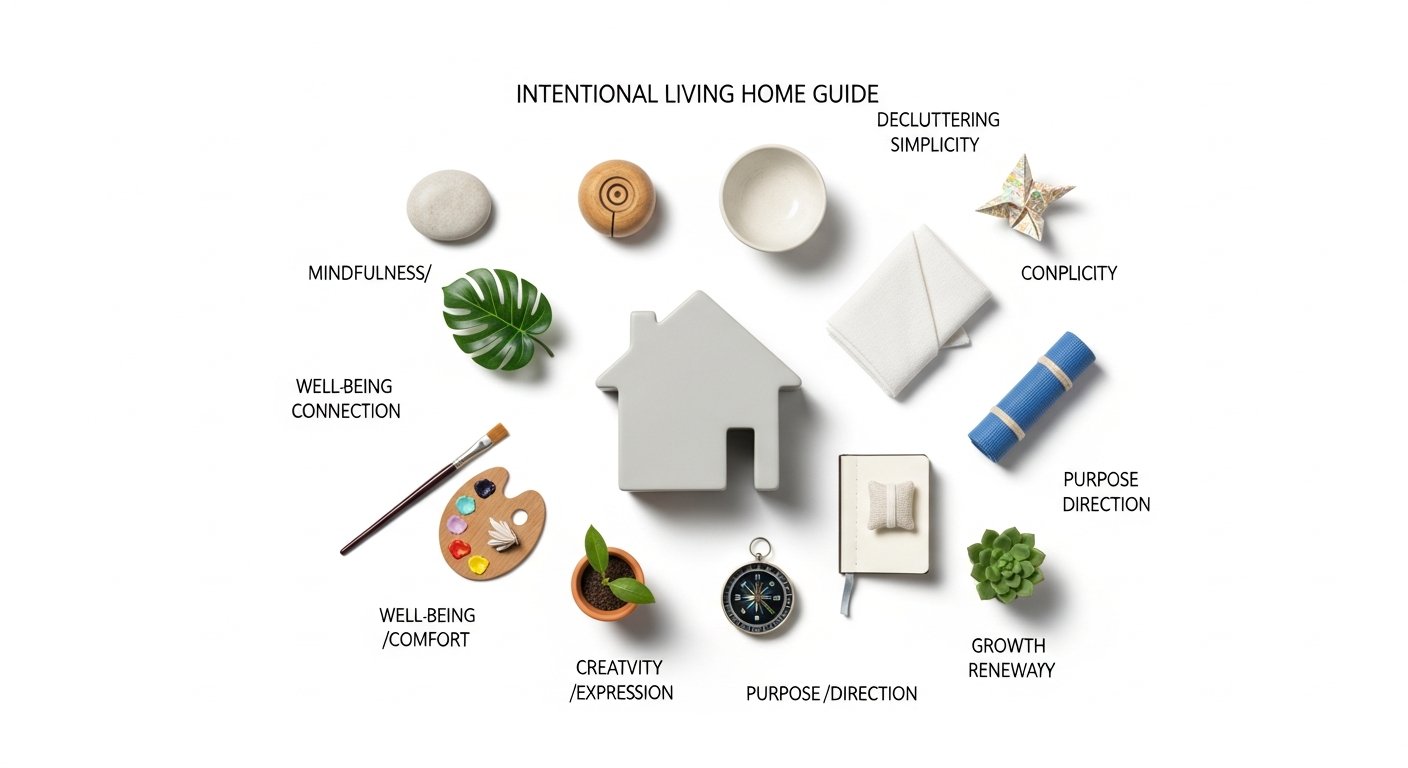
Building a mindful residence requires more than aesthetic upgrades. It demands actionable systems that align your daily routines with your core values. When we establish strict physical boundaries for our possessions, cognitive load dramatically decreases because the brain no longer has to subconsciously process and categorize visual noise. Research confirms this physiological response; individuals who describe their living spaces as cluttered exhibit higher baseline levels of cortisol throughout the day (UCLA Center on Everyday Lives of Families, 2012).
Imagine walking into your entryway after a grueling commute. Instead of tripping over a tangled pile of sneakers and sorting through unopened mail scattered across the console table, you place your keys in a designated ceramic bowl and hang your coat on a specific brass hook. That immediate reduction in friction sets a peaceful tone for the entire evening.
Decluttering Methodologies for Lasting Order
Effective purging goes beyond seasonal binge-cleaning. It requires adopting a daily mindset shift regarding what crosses your threshold. One highly effective technique is spatial anchoring, the practice of assigning a permanent, logical home to every item based strictly on its frequency of use rather than its category. Items used daily sit at eye level. Occasional tools move to top shelves. See our detailed guide on sustainable decluttering methods.
Designing Spaces for Calm, Clarity, and Connection
Room layouts dictate human behavior. A poorly arranged living room isolates family members, while a thoughtful configuration encourages interaction. Focus on lighting, texture, and flow.
Layering soft ambient lighting rather than relying on harsh overhead fixtures signals to your nervous system that it is time to wind down. Small adjustments yield massive atmospheric shifts.
Integrating Sustainable and Eco-Conscious Practices
A harmonious environment respects the broader ecosystem. Material choices matter immensely. Opting for natural, biodegradable textiles over synthetic alternatives reduces indoor air pollution while supporting responsible manufacturing cycles.
- Switch to low-VOC paints to maintain pristine indoor air quality.
- Invest in high-efficiency thermal curtains to regulate room temperature naturally.
- Source reclaimed wood or second-hand furniture to minimize landfill waste.
See our detailed guide on eco-friendly home upgrades.
[INLINE IMAGE 2: An overhead floor plan illustration showing a living room with floating furniture in the center and clear walking paths around the perimeter.]
How Does Intentional Living Enhance Women’s Well-being?
Addressing the Mental Load and Gender Roles
For many women, the home is historically tied to the invisible burden of household management, often referred to as the mental load. Traditional gender roles in home management can transform a living space from a place of rest into a constant reminder of pending chores. Adopting a mindful approach to your surroundings directly combats this fatigue. By minimizing excess possessions and establishing clear organizational systems, you drastically reduce the daily cognitive labor required to maintain your space.
Creating Space for Self-Care Rituals
A purposeful environment naturally carves out physical and temporal space for essential self-care rituals. When you aren’t spending your weekends managing clutter, you reclaim hours that can be redirected toward personal growth, rest, or creative pursuits. Whether it is a dedicated corner for morning meditation or a streamlined bathroom that makes your evening skincare routine feel like a spa experience, intentional design prioritizes your holistic wellness over mere aesthetics.
The Impact of Your Home Environment on Mental Clarity
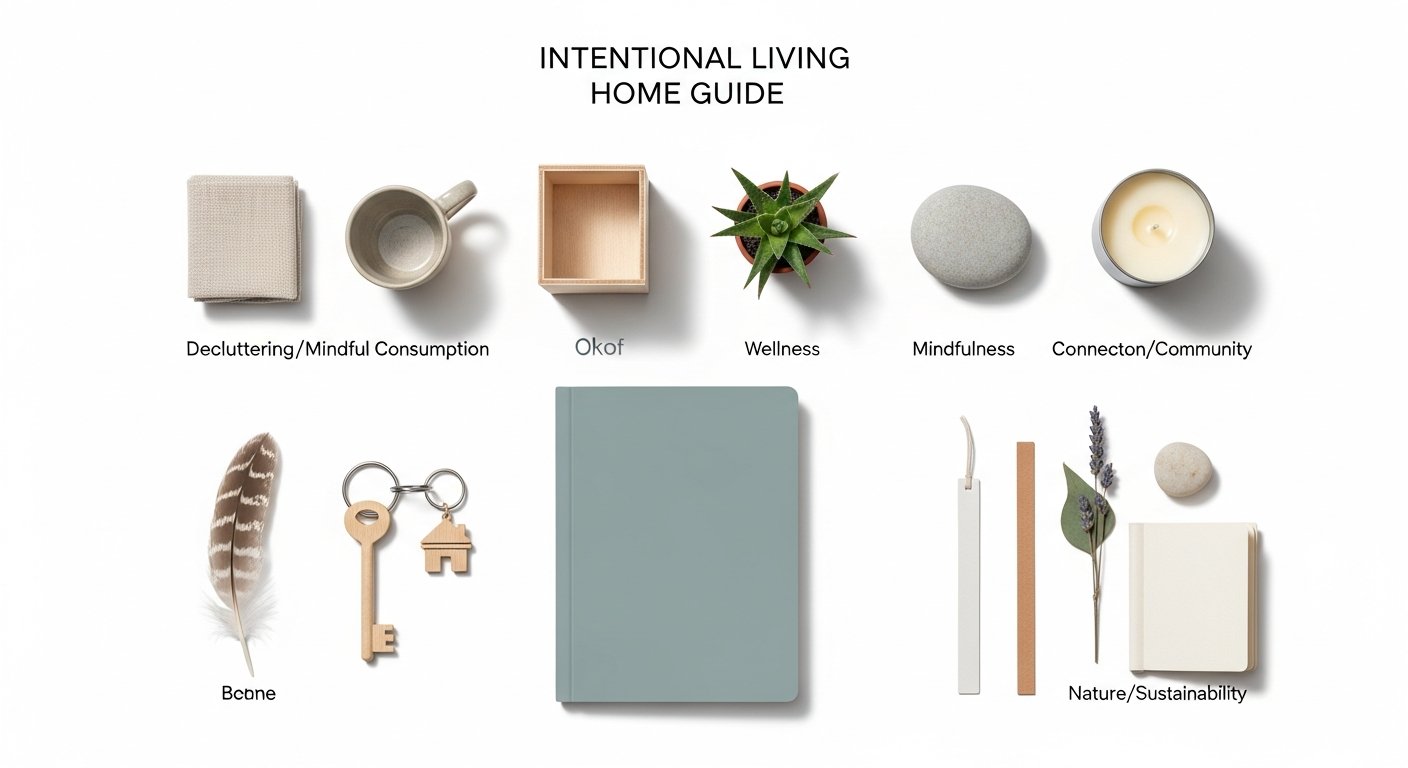
Building an environment that supports your mind is a core principle of any successful mindful space strategy. Your physical surroundings are never truly passive. They actively shape your daily cognitive function.
Visual Clutter and Its Cognitive Load
Your brain constantly scans your surroundings. When every surface holds piles of mail, scattered shoes, and random charging cables, your visual cortex works overtime. Multiple stimuli compete for neural representation. Because your brain must continuously filter out these irrelevant objects, it depletes your working memory and leaves less capacity for deep thought. Physical clutter in your surroundings directly degrades cognitive processing, reducing sustained focus significantly (Princeton Neuroscience Institute, 2011).
Crafting Zones for Focus, Relaxation, and Creativity
Imagine walking into a dedicated reading corner. A low-slung velvet armchair sits beside a warm amber floor lamp, with a small walnut side table holding nothing but your current book and a ceramic mug. The moment you sit down, your breathing slows. You naturally shift into a state of deep relaxation. By consistently using this specific area only for reading, you leverage context-dependent memory, training your nervous system to anticipate a specific emotional state based on physical cues. Divide your floor plan into distinct micro-environments to support different needs.
The Power of Sensory Design for Emotional Balance
True clarity extends beyond what you see. The acoustic and olfactory layers of your space profoundly shape your daily mood. Harsh echoes bouncing off hardwood floors create subtle, continuous agitation. Softening these acoustics with heavy linen curtains and thick rugs absorbs high-frequency noise, calming the central nervous system.
See our detailed guide on sensory home design.
[INLINE IMAGE 4: A split-screen illustration showing a cluttered, chaotic desk with tangled visual pathways on the left, and a clean, zoned reading nook with calm, straight visual pathways on the right.]
Types of Intentional Daily Habits and Routines
Morning Resets vs. Evening Wind-Downs
Maintaining a mindful space relies on the types of routines you implement. Morning resets focus on preparing your environment for the day ahead—such as making the bed to create an immediate sense of order or opening windows to improve indoor air quality. Conversely, evening wind-down routines are about closing out the day’s activities. This might involve a ten-minute sweep to return items to their designated spatial anchors, ensuring you wake up to a blank slate.
Micro-Habits for Continuous Order
Rather than relying on exhausting weekend cleaning marathons, successful home management utilizes micro-habits. The ‘one in, one out’ rule prevents accumulation, while the ‘touch it once’ principle ensures mail and coats are immediately put in their proper places. Integrating these small, manageable actions into your daily life prevents the buildup of visual noise and sustains the peaceful atmosphere you have worked hard to cultivate.
Methods for Sustaining Your Mindful Space Long-Term
Conducting Seasonal Environment Audits
As your life evolves, so should your living space. A home that supported you perfectly last year might need adjustments today. Conducting seasonal environment audits allows you to reassess your belongings and layouts. Ask yourself if your current setup still aligns with your daily routines and overarching values. This periodic reflection prevents stagnation and ensures your sanctuary remains highly functional.
Embracing Imperfection and Flexibility
The goal of curating your surroundings is not to achieve a sterile, magazine-perfect aesthetic, but to foster a supportive backdrop for real life. Embrace flexibility and allow your space to get messy during creative projects or family gatherings. The true measure of a well-designed, purposeful home is not how clean it stays, but how quickly and effortlessly it can be reset to a baseline of calm.
Conclusion: Your Journey to a Purposeful Home
Transforming your living space is an ongoing journey rather than a final destination. By implementing the decluttering methodologies, sensory design principles, and daily micro-habits outlined in this guide, you empower yourself to create a home that actively nurtures your well-being. Start small, remain consistent, and watch as your physical environment becomes a profound source of daily joy and mental clarity.
Sources & References
- McMains, S., & Kastner, S. (2011). Interactions of top-down and bottom-up mechanisms in human visual cortex. Journal of Neuroscience.
- Saxbe, D. E., & Repetti, R. (2010). No place like home: Home tours correlate with daily patterns of mood and cortisol. Personality and Social Psychology Bulletin.
- Roster, C. A., Ferrari, J. R., & Jurkat, M. P. (2016). The dark side of home: Assessing possession ‘clutter’ on subjective well-being. Journal of Environmental Psychology.