

The Future of Vitality: The Best Wellness Habits for 2026
The landscape of health and self-care is shifting. We are moving away from the era of “bio-hacking” shortcuts and “grind culture” toward a more nuanced, sustainable, and science-backed approach to living well. As we look toward 2026, the focus has pivoted from generic fitness trends to hyper-personalized wellness routines that honor our unique biological blueprints. Building a daily routine is no longer about doing *more*; it is about doing the *right* things at the right time to foster long-term longevity and mental clarity.
In 2026, wellness is defined by “intentional living.” It’s the realization that our environment, our digital consumption, and our biological rhythms are deeply interconnected. Whether you are a seasoned wellness enthusiast or just beginning your journey toward a better lifestyle, these emerging habits represent the gold standard for health. This guide explores the foundational wellness habits for 2026 that will help you reclaim your energy, sharpen your focus, and build a body and mind that thrive in the modern world.
1. Circadian Rhythm Optimization: Mastering the Master Clock
One of the most significant shifts in wellness for 2026 is the mainstream adoption of circadian biology. We have moved beyond “getting eight hours of sleep” to focusing on the *timing* and *quality* of that sleep relative to the sun. Your circadian rhythm is an internal clock that regulates everything from hormone production to digestion and immune function.
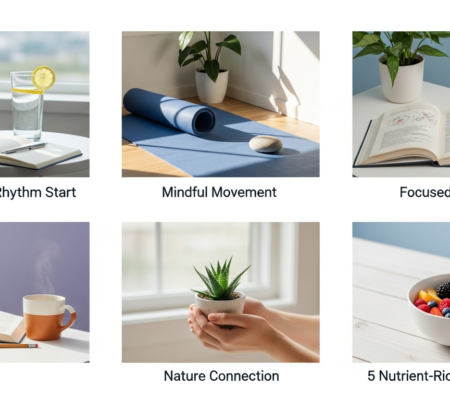
To align with this habit, start your day with “anchoring.” This involves getting natural sunlight into your eyes within the first 30 minutes of waking. This simple act triggers a cortisol spike to wake you up and sets a timer for melatonin production later that night. In 2026, wellness-conscious individuals are also utilizing “low-blue-light evenings,” swapping harsh overhead LEDs for amber-toned lamps or candlelight two hours before bed.
Another key component of circadian optimization is **Time-Restricted Feeding (TRF)**. Rather than focusing solely on calories, the 2026 routine emphasizes eating within a consistent 8-to-10-hour window that ends at least three hours before sleep. This allows your metabolic processes to rest, giving your body the energy it needs for cellular repair (autophagy) during the night.
2. Metabolic Flexibility through “Fiber-First” Nutrition
For years, the conversation around nutrition was dominated by restrictive diets. In 2026, the focus has shifted toward **metabolic flexibility**—the body’s ability to switch efficiently between burning carbohydrates and fats for fuel. The cornerstone of this habit isn’t about what you cut out, but what you add in: diverse plant fibers.
The “Fiber-First” approach involves consuming a significant portion of fiber (vegetables, seeds, or legumes) at the beginning of every meal. This creates a “fiber net” in the stomach that slows the absorption of glucose, preventing the energy crashes and insulin spikes that lead to chronic inflammation.
Furthermore, 2026 is the year of **Microbiome Diversity**. Instead of just taking a generic probiotic, the modern wellness routine focuses on “The 30-Plant Rule,” aiming to consume 30 different types of plant-based foods per week. This diversity fuels a robust gut microbiome, which is now recognized as the “second brain,” influencing everything from your mood and serotonin levels to your skin health and immune resilience.
3. Neuro-Movement and Functional Longevity
The days of punishing, high-intensity workouts that leave you drained are being replaced by “Movement for Longevity.” In 2026, the most effective fitness routines prioritize **Zone 2 Cardio** and **Neuro-Movement**.
Zone 2 training—exercise performed at a steady pace where you can still hold a conversation—is the secret to mitochondrial health. It builds a massive aerobic base without overtaxing the nervous system, making it a sustainable daily habit for people of all ages.
Coupled with this is a focus on “Neuro-Movement,” which includes balance work, mobility drills, and proprioception exercises. As we spend more time in digital environments, our physical “map” of our body can become blurred. Habits like standing on one leg while brushing your teeth, performing daily joint rotations (CARs), or engaging in “movement snacks” (5-minute stretches every hour) are essential for maintaining a high quality of life. The goal in 2026 isn’t just to look good; it’s to ensure your body remains functional and pain-free well into your later decades.
4. Digital Harmony and Dopamine Management
In 2026, we have finally acknowledged that our smartphones are not just tools but significant influencers of our neurochemistry. The “Digital Detox” has evolved into **Digital Harmony**. This habit involves the intentional management of dopamine—the neurotransmitter responsible for motivation and reward.
Constant notifications and “infinite scroll” features hijack our dopamine receptors, leading to “baseline depletion,” which manifests as brain fog and low motivation. The best wellness habit for 2026 is the **”Analog First Hour.”** This means no screens for the first 60 minutes of the day. Instead, this time is reserved for “low-dopamine” activities like journaling, meditation, or light movement.
Additionally, “Forest Bathing” or “Nature Immersions” have become non-negotiable. Scientific data in 2026 confirms that even 20 minutes in a natural environment significantly lowers cortisol and boosts “killer T-cells” in the immune system. By balancing high-tech lives with high-touch nature experiences, we protect our mental health from the pressures of an always-on society.
5. Social Wellness and the “Third Place”
Loneliness has been identified as a health risk equivalent to smoking 15 cigarettes a day. Consequently, the wellness habits of 2026 place a heavy emphasis on **Social Wellness**. While individual habits like meditation are great, human beings are biologically wired for community.
Building a “Third Place”—a social environment outside of home (the first place) and work (the second place)—is a vital habit for the modern era. This could be a local run club, a community garden, a book club, or even a regular coffee shop meetup.
In 2026, we are also seeing the rise of **”Co-Regulation.”** This is the practice of spending time with people who have a calm, regulated nervous system, which helps soothe our own. Investing time in deep, face-to-face conversations rather than surface-level digital interactions is a fundamental pillar of emotional health. Social wellness isn’t just a “nice-to-have”; it is a physiological necessity that regulates our stress response and promotes longevity.
6. Cognitive Fitness and “Deep Rest” Protocols
Mental health in 2026 has moved beyond crisis management toward “Cognitive Fitness.” This involves proactive habits designed to strengthen the brain’s resilience against stress and cognitive decline. One of the most effective habits in this category is **Non-Sleep Deep Rest (NSDR)** or Yoga Nidra.
NSDR is a guided practice that allows the brain to enter a state of deep relaxation while remaining conscious. Even 10 to 20 minutes of NSDR can mimic the restorative effects of a 90-minute nap, helping to clear adenosine (the “sleepiness” chemical) and reset the nervous system.
Furthermore, 2026 wellness routines often include “Brain Training” through focused-attention meditation. Rather than trying to “clear the mind,” the habit is to practice returning the attention to the breath whenever it wanders. This strengthens the prefrontal cortex, improving executive function and emotional regulation. In a world of constant distractions, the ability to control your attention is the ultimate wellness superpower.
***
FAQ: Frequently Asked Questions About 2026 Wellness Habits
**Q1: If I can only start one new habit in 2026, which one should it be?**
A1: The most impactful habit is **morning sunlight exposure**. It is free, takes only 5–10 minutes, and sets the foundation for your sleep, mood, and hormonal health for the rest of the day. It is the “lead domino” that makes all other habits easier to maintain.
**Q2: How does AI play a role in wellness routines for 2026?**
A2: In 2026, AI is used for **hyper-personalization**. Many people use AI-integrated wearables to track their “readiness scores,” which analyze heart rate variability (HRV) and sleep quality to tell them whether they should do a hard workout or a recovery session that day. AI helps take the guesswork out of wellness.
**Q3: Is “bio-hacking” still relevant in 2026?**
A3: The term has evolved. While the “gadget-heavy” phase of bio-hacking has cooled, the core principle of using science to optimize biology remains. The focus in 2026 is on “Foundational Bio-hacking”—using simple, natural interventions like cold exposure, sauna, and breathwork rather than expensive, unproven supplements.
**Q4: How do I stay consistent with these habits when life gets busy?**
A4: The key is **”Habit Stacking.”** Attach a new wellness habit to an existing one. For example, practice your balance drills (Neuro-Movement) while you wait for your morning coffee to brew, or listen to an NSDR script during your afternoon commute if you aren’t driving.
**Q5: What is the biggest “wellness myth” we’ve debunked by 2026?**
A5: The myth that “more is better.” We now know that over-exercising, over-supplementing, and over-restricting food can be just as damaging as doing nothing. 2026 is the year of “The Minimum Effective Dose”—finding the smallest amount of an intervention that yields the greatest health benefit.
***
Conclusion: Designing Your Path to Vitality
The best wellness habits for 2026 are not about achieving perfection; they are about fostering a deeper connection with your own biology and the world around you. As we navigate an increasingly digital and fast-paced environment, the most radical act of self-care is to slow down and honor our fundamental human needs: light, movement, real food, community, and rest.
Building a wellness routine is a journey of experimentation. You don’t need to adopt all these habits overnight. Start by choosing one that resonates with your current lifestyle—perhaps it’s the “Analog First Hour” or the “Fiber-First” approach to eating. Once that habit becomes second nature, layer on another.
By the time you reach the end of 2026, these small, consistent actions will have compounded into a lifestyle of profound health and resilience. The future of wellness is personal, it is sustainable, and it is within your reach. Start today, and let 2026 be the year you truly thrive.