
Building a Healthy Lifestyle Plan: A Roadmap for Sustainable Wellness
In an era of instant gratification and viral health trends, the concept of a “lifestyle plan” often gets buried under the weight of 30-day challenges and restrictive “reset” diets. However, as we look toward 2026, the global shift in wellness is moving away from temporary fixes and toward bio-individual, sustainable systems. Building a healthy lifestyle plan is not about achieving a specific number on a scale or mastering a complex yoga pose by next month; it is about constructing a framework that supports your physical, mental, and emotional well-being for decades to come.
A successful plan functions as a living document. It acknowledges that your needs will change as you age, as your career evolves, and as your personal life shifts. To build a routine that actually sticks, you must move beyond the “what” and “how” and tap into the “why.” This guide provides a comprehensive, step-by-step approach to auditing your current habits, implementing high-impact changes, and mastering the psychology of habit formation to ensure your health journey is both effective and enjoyable.
—
Foundations: Why Most Lifestyle Plans Fail (and How Yours Will Succeed)
Most people fail to maintain a healthy lifestyle plan because they attempt to overhaul their entire existence overnight. We have all been there: Monday morning arrives, and we suddenly expect ourselves to wake up at 5:00 AM, drink a gallon of water, hit the gym for ninety minutes, and eat nothing but steamed broccoli. By Wednesday, the “willpower battery” is drained, and by Friday, we have reverted to our old patterns.
The primary reason these plans fail is that they rely on **willpower** rather than **systems**. Willpower is a finite resource; systems are automated behaviors. To succeed in 2026 and beyond, your plan must be built on the principle of *incrementalism*. This means focusing on 1% improvements that compound over time.
Before you add a single new habit, you must perform a “lifestyle audit.” Spend three days tracking your current behaviors without judgment. Note when you feel most energetic, what triggers your stress, and which habits are currently “automatic” (like scrolling through your phone before bed). Once you understand your current baseline, you can begin to insert small, positive frictions into your day to steer your life in a healthier direction.
The Nutritional Blueprint: Fueling for Longevity and Energy
Nutrition is often the most confusing aspect of building a healthy lifestyle plan because of the conflicting information available online. However, the most sustainable approach to eating revolves around **nutrient density** and **satiety** rather than deprivation.
In your plan, prioritize “Whole-Food, Single-Ingredient” items. This doesn’t mean you can never eat processed foods, but it means the foundation of your diet should consist of vegetables, fruits, high-quality proteins, and healthy fats.
Key strategies for your 2026 nutrition plan include:
* **The Protein-First Approach:** Protein is the most satiating macronutrient and is essential for maintaining muscle mass as we age. Aim to include a palm-sized portion of protein in every meal.
* **Fiber for Gut Health:** A healthy microbiome is linked to everything from improved mood to a stronger immune system. Focus on “eating the rainbow” to ensure a variety of fiber sources.
* **Hydration Mastery:** Fatigue is often just dehydration in disguise. Start your day with 16 ounces of water before reaching for caffeine.
* **Mindful Eating:** In our fast-paced world, we often eat while distracted. A healthy plan includes “device-free” meals where you focus on the flavors and textures of your food, which allows your brain to register fullness signals correctly.
Redefining Fitness: Creating a Movement Practice You Actually Enjoy
If you hate running, your healthy lifestyle plan should not include daily five-mile runs. The “best” exercise is the one you will actually do consistently. In 2026, the fitness world is moving toward “Functional Longevity”—training your body to move well in real-life scenarios.
A balanced movement plan should incorporate three main pillars:
1. **Strength Training:** Two to three times a week, focus on resistance training. Building muscle isn’t just about aesthetics; it improves metabolic rate, bone density, and glucose regulation.
2. **Cardiovascular Health:** Aim for a mix of “Zone 2” training (steady-state activity like brisk walking or cycling where you can still hold a conversation) and occasional high-intensity bursts.
3. **Non-Exercise Activity Thermogenesis (NEAT):** This is the energy expended for everything we do that is not sleeping, eating, or sports-like exercise. This includes walking to the mailbox, cleaning the house, or standing while on a phone call. Increasing your NEAT is often more effective for weight management than a single hour at the gym followed by ten hours of sitting.
Remember: Movement is a privilege, not a punishment for what you ate. Shift your mindset from “burning calories” to “celebrating capability.”
The Invisible Pillars: Optimizing Sleep and Nervous System Health
You cannot out-train a bad diet, and you certainly cannot out-diet a lack of sleep. Sleep is the ultimate performance-enhancing drug. During sleep, your brain flushes out toxins, your muscles repair themselves, and your hormones—including those that regulate hunger—are balanced.
To build a lifestyle plan that prioritizes recovery, consider the following:
* **The 3-2-1 Rule:** Stop eating three hours before bed, stop working two hours before bed, and stop looking at screens one hour before bed.
* **Light Exposure:** Try to get sunlight in your eyes within 30 minutes of waking up. This sets your circadian rhythm and helps you produce melatonin naturally in the evening.
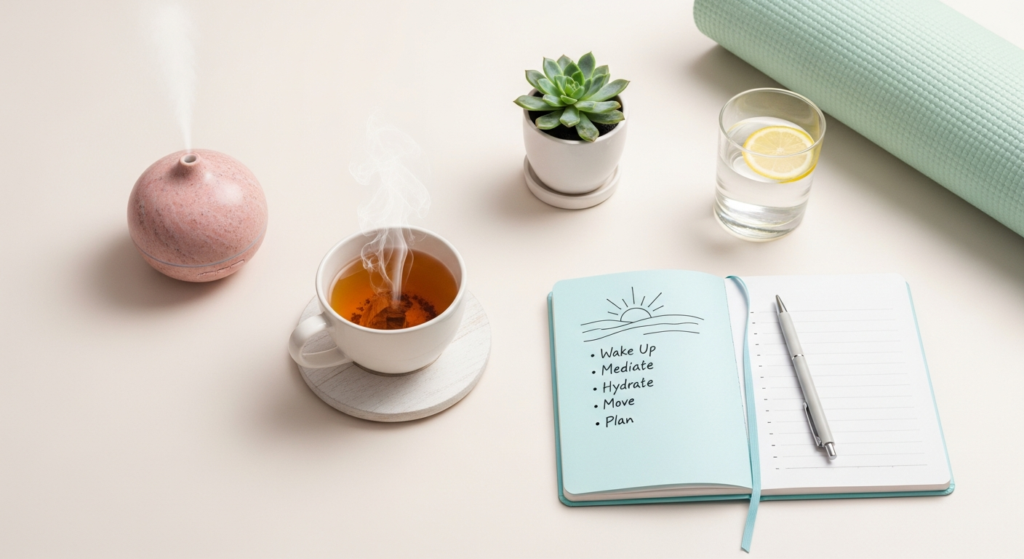
* **Stress Management:** We live in a state of chronic “sympathetic” (fight or flight) activation. Your plan must include daily “parasympathetic” (rest and digest) activities. This could be five minutes of box breathing, a short meditation, or a gratitude journal. Managing your nervous system is as critical to your health as your heart rate.
The Science of Habit Formation: How to Make Changes Stick
The secret to building a healthy lifestyle plan that lasts is a concept called **Habit Stacking**. This involves taking a habit you already do automatically (like brushing your teeth) and “stacking” a new habit on top of it (like doing five air squats).
Another vital component is **Environmental Design**. If you want to eat more fruit, put a fruit bowl on the counter. If you want to spend less time on your phone, charge it in a different room at night. You should make the “good” habits easy and the “bad” habits difficult.
Furthermore, embrace the “Never Miss Twice” rule. Life will inevitably get in the way. You will have a day where you eat poorly or skip your workout. The difference between those who succeed and those who quit is how they handle that lapse. A healthy lifestyle plan allows for flexibility. If you miss one day, your only goal is to make sure you don’t miss the second day. Consistency beats perfection every single time.
Maintenance and Flexibility: The Art of the Long-Term Pivot
A lifestyle plan is not a destination; it is a journey of constant adjustment. As you move through 2026, you will encounter seasons of high stress, holidays, and physical changes. Your plan must be flexible enough to accommodate these shifts.
Every three months, perform a “Plan Review.” Ask yourself:
* Which habits feel effortless now? (These are now part of your identity).
* Which habits am I still struggling with? (Perhaps these need to be broken down into even smaller steps).
* Is my “Why” still the same?
The 80/20 rule is a great benchmark for maintenance: If you follow your plan 80% of the time, the other 20% won’t derail your progress. This allows for social gatherings, celebrations, and the occasional lazy Sunday without the guilt that often leads to total abandonment of health goals. Building a healthy lifestyle is ultimately about creating a life you don’t feel the need to constantly “escape” from.
—
FAQ: Frequently Asked Questions
#
1. How long does it actually take to build a healthy lifestyle?
While the old myth says it takes 21 days to form a habit, modern research suggests it can take anywhere from 18 to 254 days, depending on the complexity of the behavior. For a total lifestyle transformation, expect to spend at least six months consistently practicing your new routines before they feel like a natural part of who you are.
#
2. Can I build a healthy lifestyle plan on a tight budget?
Absolutely. Many of the most impactful health habits are free. Walking, drinking more water, practicing mindfulness, and getting adequate sleep cost nothing. When it comes to nutrition, focus on staples like beans, oats, frozen vegetables, and eggs, which are often more affordable and just as nutritious as “superfood” trends.
#
3. What if I have a very busy schedule and no time for the gym?
You don’t need a gym to be healthy. High-intensity interval training (HIIT) can be done in 15 minutes at home, and walking meetings can replace seated ones. Focus on “movement snacks” throughout the day—short bursts of activity that add up to significant health benefits over time.
#
4. Do I need to take supplements to be truly healthy?
Supplements should be exactly that: a *supplement* to a healthy diet, not a replacement. While some people benefit from Vitamin D, Magnesium, or Omega-3s, it is always best to consult with a healthcare professional and get blood work done before starting a supplement regimen to ensure you are meeting your specific needs.
#
5. How do I stay motivated when I don’t see immediate results?
Motivation is a feeling, and feelings are fleeting. Rely on **discipline and systems** instead. Focus on “Non-Scale Victories” (NSVs) such as having more energy, sleeping better, improved mood, or your clothes fitting more comfortably. When you focus on how you *feel* rather than how you *look*, the motivation to continue becomes self-sustaining.
—
Conclusion: Starting Your Journey Today
Building a healthy lifestyle plan is one of the most significant investments you can make in yourself. As we approach the middle of this decade, the definition of health has expanded to include not just the absence of disease, but the presence of vitality, mental clarity, and emotional resilience.
Your journey toward a healthier 2026 starts with a single, small decision. Perhaps it is choosing to walk for ten minutes today, or deciding to swap a sugary drink for sparkling water. These tiny choices may seem insignificant in the moment, but they are the bricks that build the foundation of your future self.
Remember that perfection is the enemy of progress. Your lifestyle plan doesn’t need to be flawless; it just needs to be better than it was yesterday. By focusing on sustainable nutrition, joyful movement, restorative sleep, and the psychology of habit stacking, you are not just changing what you do—you are changing who you are. Embrace the process, be patient with yourself, and enjoy the incredible benefits of a life lived in balance.