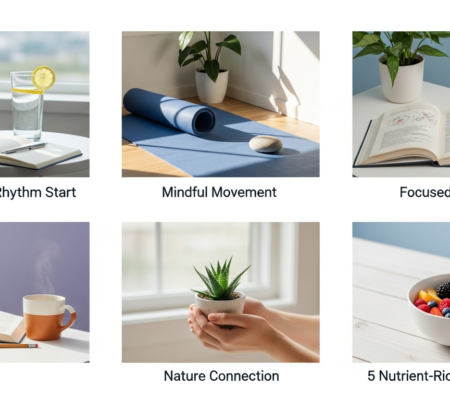


Mastering Your Daily Morning Routine for Maximum Productivity in 2026
The way you begin your day is the blueprint for how you live your life. In our fast-paced, hyper-connected world, the first hour of your morning is often the only time you have complete control over your environment, your thoughts, and your energy. By 2026, the concept of “productivity” has shifted away from mere “busy-ness” and toward “intentionality.” A high-performance morning routine is no longer about waking up at 4:00 AM to answer emails; it is about priming your brain and body to handle the cognitive demands of a complex digital landscape. When you win the morning, you build a sense of momentum that carries you through the inevitable stresses of the afternoon. This guide explores how to design a sustainable daily morning routine for productivity that blends biological science with modern wellness habits, ensuring you start every day with clarity, purpose, and unshakeable focus.
The Biological Foundation: Aligning with Your Circadian Rhythm
To build a truly effective morning routine, you must first understand the biological machinery driving your energy levels. Your body operates on a circadian rhythm—a 24-hour internal clock that regulates sleep-wake cycles, hormone release, and body temperature. The cornerstone of a productive morning is not just when you wake up, but how you signal to your brain that the day has begun.
The most critical factor in this signaling is natural light. Within 30 minutes of waking, you should aim to get direct sunlight in your eyes (without looking directly at the sun). This triggers the release of cortisol—the “alertness hormone”—and sets a timer for the release of melatonin later that evening. In the productivity landscape of 2026, we understand that light hygiene is just as important as sleep hygiene.
Furthermore, hydration is non-negotiable. After seven to eight hours of sleep, your body is in a state of mild dehydration. Dehydration leads to brain fog and fatigue, which many people mistakenly try to cure with immediate caffeine. Instead of reaching for the coffee pot first, drink 16 to 20 ounces of water, perhaps with a pinch of sea salt or a squeeze of lemon to replenish electrolytes. This simple act rehydrates your cells and jumpstarts your metabolism, providing a natural energy boost that lasts longer than any stimulant.
Mental Priming: Transitioning from Reactive to Proactive
The greatest enemy of morning productivity is the “Digital Reflex”—the urge to check your phone, social media, or work emails the moment you open your eyes. When you do this, you immediately put your brain into a reactive state. You are responding to other people’s priorities, stresses, and agendas before you have even established your own.
To cultivate a proactive mindset, incorporate mental priming exercises. This can take several forms:
1. **Meditation and Breathwork:** Even five minutes of mindfulness can lower your baseline stress for the day. Techniques like Box Breathing or the Wim Hof Method help oxygenate the blood and calm the nervous system, allowing you to approach your task list from a place of composure rather than anxiety.
2. **Journaling:** Use a “Brain Dump” or “Morning Pages” approach to clear mental clutter. Writing down your anxieties or stray thoughts gets them out of your head and onto paper, freeing up cognitive “RAM” for the work ahead.
3. **Visualization:** Spend two minutes visualizing your most important task for the day being completed successfully. This builds neurological pathways that make the actual execution of the task feel more familiar and less daunting.
By delaying digital input for at least 60 minutes after waking, you reclaim your cognitive sovereignty and ensure that your first thoughts of the day are your own.
The “Eat the Frog” Philosophy: Tackling the Deep Work
Productivity in 2026 is defined by “Deep Work”—the ability to focus without distraction on a cognitively demanding task. The most successful individuals structure their morning routine around their “Deep Work” block. This is often referred to as “Eating the Frog,” a concept popularized by Brian Tracy based on a Mark Twain quote: if you eat a live frog first thing in the morning, nothing worse will happen to you the rest of the day.
Your “frog” is your most difficult, most important task—the one you are most likely to procrastinate on. Your willpower and executive function are highest in the morning. Instead of wasting this precious mental energy on low-value tasks like filing digital folders or responding to Slack messages, dedicate your first 90 minutes of work to your highest-impact project.
To facilitate this, prepare your workspace the night before. This is known as “environmental priming.” If you are a writer, have your document open. If you are a coder, have your IDE ready. By reducing “friction” and decision fatigue in the morning, you can slide directly into a flow state. Remember, productivity isn’t about doing more things; it’s about doing the *right* things with your best energy.
Physical Vitality: Movement as a Productivity Catalyst
A sedentary morning leads to a sedentary mind. You don’t need a grueling 90-minute gym session to see the productivity benefits of exercise; you simply need to move your body to stimulate blood flow and neurogenesis.
Physical activity increases the production of BDNF (Brain-Derived Neurotrophic Factor), a protein that supports the survival of existing neurons and encourages the growth of new ones. In essence, exercise makes your brain more “plastic” and ready to learn.
Your morning movement could be as simple as:
* A 15-minute brisk walk outside (combining light exposure with movement).
* A short yoga or mobility flow to release tension from sleep.
* A high-intensity interval training (HIIT) circuit to spike your heart rate.
The goal is to shift your physiology from “rest mode” to “action mode.” When your body feels vibrant and energized, your brain follows suit. By 2026, the “wellness-productivity” link is undeniable: those who move their bodies in the morning report significantly higher levels of sustained focus throughout the afternoon “slump” period.
Customizing Your Routine: The “Menu” Approach
One of the biggest mistakes people make when building a morning routine is trying to adopt someone else’s rigid schedule. A routine that works for a CEO with a personal chef will not work for a parent with two toddlers. Instead of a rigid checklist, think of your morning routine as a “menu” of habits that you can scale based on the time you have available.
On a “Full Menu” day (60–90 minutes), you might do the full suite: sunlight, hydration, meditation, exercise, and deep work. On a “Lite Menu” day (15 minutes), you might simply hydrate, do one minute of stretching, and identify your top priority for the day.
The key to long-term habit formation is flexibility and consistency. If you miss a component of your routine, don’t abandon the entire day. The psychological benefit of completing even a truncated version of your routine is immense; it reinforces your identity as a disciplined person who prioritizes their well-being. Customization ensures that your routine serves you, rather than you becoming a slave to your routine.
The Night-Before Preparation: Why Tomorrow Starts Today
A productive morning actually begins the night before. You cannot have a high-energy morning if you are recovering from a low-quality night. In 2026, we view sleep as the ultimate performance-enhancing drug.
To set yourself up for morning success, implement a “Shutdown Ritual.” This includes:
* **Digital Sunset:** Turning off screens 60 minutes before bed to allow melatonin production.
* **Decision Culling:** Picking out your clothes and packing your bag. This saves you from making trivial decisions in the morning, preserving your “decision capital” for work.
* **The “3-2-1” Rule:** No food three hours before bed, no work two hours before bed, and no screens one hour before bed.
By automating the logistics of your morning the night before, you remove the barriers to entry. When you wake up, you don’t have to think about what to do; you simply execute the plan you’ve already laid out. This transition from “planning” to “doing” is what separates those who are perpetually busy from those who are truly productive.
FAQ: Optimizing Your Morning Routine
#
1. How long should a morning routine take to be effective?
There is no magic number, but most effective routines range from 30 to 90 minutes. The effectiveness is measured by your state of mind, not the clock. Even a 10-minute routine—consisting of hydration, a quick stretch, and goal setting—can drastically improve your productivity compared to having no routine at all.
#
2. Can I still have coffee as part of my routine?
Yes, but timing is everything. It is recommended to wait 60 to 90 minutes after waking before consuming caffeine. This allows your natural cortisol levels to peak and clear out adenosine (the chemical that makes you feel sleepy) naturally. Delaying caffeine helps prevent the dreaded mid-afternoon crash.
#
3. What if I am a “night owl”? Do I have to wake up early?
Productivity is about alignment, not just early rising. If your peak cognitive hours are in the evening, your “morning routine” starts whenever you wake up. The principles remain the same: hydrate, seek light, avoid immediate digital stimulation, and prime your mind for the day’s tasks.
#
4. How do I stay consistent when traveling or during weekends?
Use the “Smallest Version” rule. If you are traveling and don’t have access to a gym, do 20 pushups in your hotel room. If you are on vacation, keep the hydration and the 5-minute meditation. Maintaining the *sequence* of habits is more important than the *duration* of the habits when your environment changes.
#
5. How long does it take to turn a morning routine into a permanent habit?
Research suggests it takes anywhere from 18 to 254 days for a new habit to become automatic, with the average being 66 days. In 2026, habit-tracking apps and community-based accountability groups are popular tools to help bridge the gap between initial excitement and long-term discipline.
Conclusion: Building Your 2026 Success Blueprint
In the quest for productivity, a morning routine is the most powerful tool in your arsenal. It is the bridge between a chaotic life and a directed one. By focusing on biological alignment, mental priming, and intentional movement, you transform your morning from a time of stress into a period of empowerment. Remember that the goal is not perfection, but progress. Your routine should evolve as your life changes, always serving as a stable foundation upon which you build your professional success and personal wellness. As we navigate the complexities of 2026, those who master their mornings will be the ones who lead, innovate, and thrive. Start tomorrow—one glass of water, one breath, and one “frog” at a time.