

Master Your Day: The Ultimate Guide to Improving Daily Habits for Success in 2026
Success is rarely the result of a single, monumental event. Instead, it is the cumulative result of the small, seemingly insignificant choices we make every single day. As we move into 2026, the pace of life continues to accelerate, making the mastery of our daily routines more critical than ever. Improving daily habits for success isn’t about a complete life overhaul in twenty-four hours; it is about understanding the mechanics of human behavior and making incremental shifts that lead to massive long-term results. Whether you are an entrepreneur aiming for peak productivity or someone looking to enhance your mental and physical wellness, the foundation remains the same: your habits define your future. By focusing on intentionality and consistency, you can transform your lifestyle from one of reactionary chaos to one of proactive achievement. This guide explores the blueprint for building sustainable routines that empower your journey toward excellence.
1. The Science of Behavior: Understanding the Habit Loop
To change a habit, you must first understand how it is constructed. Behavioral psychology suggests that every habit—good or bad—follows a four-step cycle: the cue, the craving, the response, and the reward. This loop is the neurological engine that drives our daily actions.
* **The Cue:** This is the trigger that tells your brain to go into automatic mode. It could be a time of day, a specific location, or an emotional state.
* **The Craving:** This is the motivational force behind the habit. You don’t crave the habit itself, but the change in state it provides.
* **The Response:** This is the actual habit you perform—the thought or action.
* **The Reward:** The end goal. The reward provides satisfaction and teaches your brain which actions are worth remembering for the future.
In 2026, we are bombarded with digital cues—notifications, pings, and infinite scrolls—that often trigger unproductive habits. To improve your daily habits for success, you must learn to “hack” this loop. By identifying your negative cues and replacing them with intentional triggers, you regain control over your neurological pathways. For example, if you want to build a habit of reading more, place a book on your pillow (the cue). This makes the response (reading) much more likely to occur than if the book were tucked away on a shelf.
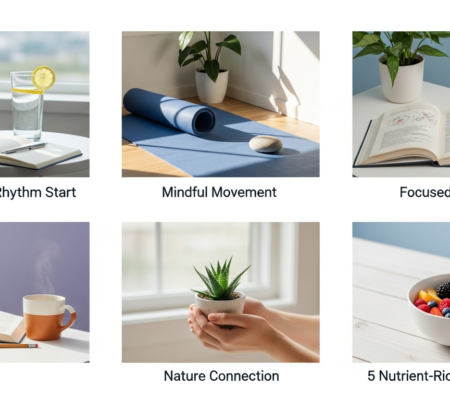
2. Morning Rituals: Setting the Tone for Peak Performance
How you spend the first hour of your day often dictates the quality of the remaining fifteen. High achievers don’t leave their mornings to chance; they use them to anchor their mindset and energy levels. A successful morning routine in 2026 isn’t necessarily about waking up at 4:00 AM, but about what you do once you are awake.
A balanced morning ritual should address three core pillars: movement, mindfulness, and momentum.
**Movement:** Engaging in physical activity—even just ten minutes of stretching or a brisk walk—increases blood flow to the brain and spikes your cortisol naturally, helping you feel alert without over-relying on caffeine.
**Mindfulness:** Starting the day with meditation, journaling, or deep breathing allows you to clear the mental “cache” from the previous day. It creates a buffer against the stress of incoming emails and social media.
**Momentum:** Identify your “Big Three” tasks for the day. Before the world starts demanding your attention, decide which three actions will move the needle closest to your goals. By tackling a difficult task early, you leverage your highest willpower levels and build psychological momentum that carries you through the afternoon slump.
3. The Power of “Atomic” Changes: Habit Stacking and Micro-Habits
One of the biggest mistakes people make when trying to improve daily habits for success is trying to do too much, too soon. This leads to burnout and the “all or nothing” mentality. The secret to longevity in habit formation is the concept of micro-habits and habit stacking.
**Habit Stacking** is a strategy where you pair a new habit with an existing one. The formula is simple: “After [Current Habit], I will [New Habit].”
* “After I pour my morning coffee, I will write down my top priority for the day.”
* “After I close my laptop for the evening, I will do five minutes of stretching.”
By “stacking” the new behavior onto an established neural pathway, you reduce the mental energy required to start.
**Micro-Habits** involve scaling a habit down to its smallest possible version. If you want to start a gym routine, start with the “two-minute rule.” Your goal isn’t to work out for an hour; it’s simply to put on your gym shoes and drive to the parking lot. Once you are there, the friction of starting is gone. In 2026, consistency is the ultimate currency. A habit that is maintained for 365 days—no matter how small—will always outperform a massive effort that only lasts for two weeks.
4. Designing Your Environment for Frictionless Success
Willpower is a finite resource. If you rely solely on self-discipline to make better choices, you will eventually fail when you are tired, stressed, or hungry. The most successful individuals don’t have more willpower; they simply design better environments.
To improve your daily habits, you must curate your surroundings to make “good” habits easy and “bad” habits difficult. This is known as “choice architecture.”
* **Reduce Friction for Good Habits:** If you want to drink more water, place a full carafe on your desk every morning. If you want to practice an instrument, keep it on a stand in the middle of the living room rather than in its case.
* **Increase Friction for Bad Habits:** If you find yourself distracted by your phone, place it in another room during work hours. If you want to stop snacking on junk food, don’t keep it in the house.
In the digital landscape of 2026, environment design also extends to your devices. Clean up your home screen, turn off non-human notifications, and use app blockers to ensure your digital environment supports your wellness and success goals rather than detracting from them.
5. Mindset and Resilience: Overcoming the “Consistency Gap”
The journey to better habits is never a straight line. There will be days when you miss a workout, indulge in a bad habit, or lose focus. The difference between those who succeed and those who quit lies in their resilience and their internal narrative.
The “Consistency Gap” is the period between when you start a new habit and when you see tangible results. During this time, it’s easy to feel like your efforts are wasted. However, habits are the compound interest of self-improvement. Just as money multiplies through compounding, the effects of your habits multiply as you repeat them.
To maintain resilience, adopt the **”Never Miss Twice”** rule. Missing one day is an accident; missing two days is the start of a new, negative habit. If you fall off the wagon, don’t waste energy on guilt. Simply refocus and ensure you show up the next day. Shifting your mindset from “perfection” to “identity” is also powerful. Instead of saying “I am trying to run,” say “I am a runner.” When an action is tied to your identity, you are far more likely to stick with it because you are acting in alignment with who you believe you are.
6. Evening Reflection: Auditing Your Progress and Preparing for Tomorrow
Just as the morning sets the tone, the evening provides the closure necessary for restorative sleep and a successful tomorrow. A reflective evening routine serves as a daily audit, allowing you to see what worked and what didn’t.
A successful evening routine should include:
1. **Digital Detox:** Blue light from screens interferes with melatonin production. Switching off devices 60 minutes before bed is a cornerstone of wellness.
2. **Gratitude Journaling:** Writing down three things you are grateful for shifts your brain from a “scarcity” mindset to an “abundance” mindset. This reduces cortisol and improves sleep quality.
3. **The “Brain Dump”:** If you find yourself lying awake thinking about tomorrow’s tasks, write them down. Clearing your mental to-do list onto paper signals to your brain that it’s safe to relax.
4. **Success Audit:** Ask yourself, “What did I do today that moved me toward my goals?” and “Where did I lose focus?” This isn’t about self-criticism; it’s about objective data collection so you can adjust your environment for the next day.
By 2026, the world will likely be even more automated, but the human need for reflection and rest remains unchanged. Preparing for tomorrow tonight is the ultimate gift you can give to your future self.
FAQ: Frequently Asked Questions About Habit Formation
#
1. How long does it actually take to form a new habit?
While the old myth says it takes 21 days, research suggests it takes an average of 66 days for a new behavior to become automatic. This varies depending on the complexity of the habit and the individual. The key is not to focus on the number of days, but on the consistency of the daily action.
#
2. What is the single most important habit for success?
While it varies, many experts agree that “Keystone Habits” are the most vital. A keystone habit is one that naturally leads to the improvement of other areas. For many, this is regular exercise or daily planning. When you exercise, you tend to eat better and sleep better, creating a ripple effect of success.
#
3. How do I stop procrastinating on starting a new routine?
The best way to beat procrastination is to reduce the “activation energy” required. Use the 5-second rule: the moment you have an instinct to act on a goal, you must physically move within 5 seconds or your brain will kill the urge. Count 5-4-3-2-1-GO and take the first tiny step.
#
4. Can I try to change multiple habits at once?
It is generally better to focus on one or two habits at a time. Trying to change your diet, exercise routine, sleep schedule, and work habits all at once usually leads to “ego depletion,” where your willpower is exhausted, leading to a total collapse of the new routine.
#
5. How do I stay motivated when I don’t see immediate results?
Focus on the process, not the outcome. Instead of weighing yourself every day, focus on the fact that you hit your protein goal or completed your walk. Celebrate the “win” of showing up. Remember, the results of habits are often delayed, but the growth is happening beneath the surface.
Conclusion: Embracing the Journey Toward Excellence
Improving daily habits for success is a lifelong endeavor rather than a destination. As we navigate the opportunities of 2026, it is important to remember that you are the architect of your own life. By understanding the science of the habit loop, mastering your mornings, utilizing habit stacking, and designing a supportive environment, you create a framework where success becomes inevitable rather than accidental.
The path to wellness and achievement is paved with small, consistent actions. Do not be discouraged by slow progress; the most enduring structures are built on solid foundations that take time to cure. Stay resilient, forgive yourself for setbacks, and keep your eyes on the person you are becoming. Your daily habits are the building blocks of your legacy. Start small, stay consistent, and watch as your life transforms one day at a time.